Indigenous Voices at UNOC3: A Call for Justice and Inclusive Ocean Governance

Indigenous Voices at UNOC3: A Call for Justice and Inclusive Ocean Governance

The third United Nations Ocean Conference (UNOC3), held in Nice, France from June 9–13, 2025, was a defining moment in global ocean governance. As part of efforts to advance Sustainable Development Goal 14 (SDG 14) Life Below Water, the conference aimed to accelerate action in conserving and sustainably using the ocean, seas and marine resources. However, beyond SDG 14, Indigenous leaders strongly advocated for an interconnected approach to the SDGs, urging world leaders to recognize that ocean sustainability cannot be addressed in isolation from other global challenges such as climate change, biodiversity loss, food security and Indigenous land rights.


The Fight for Inclusion in Ocean Governance

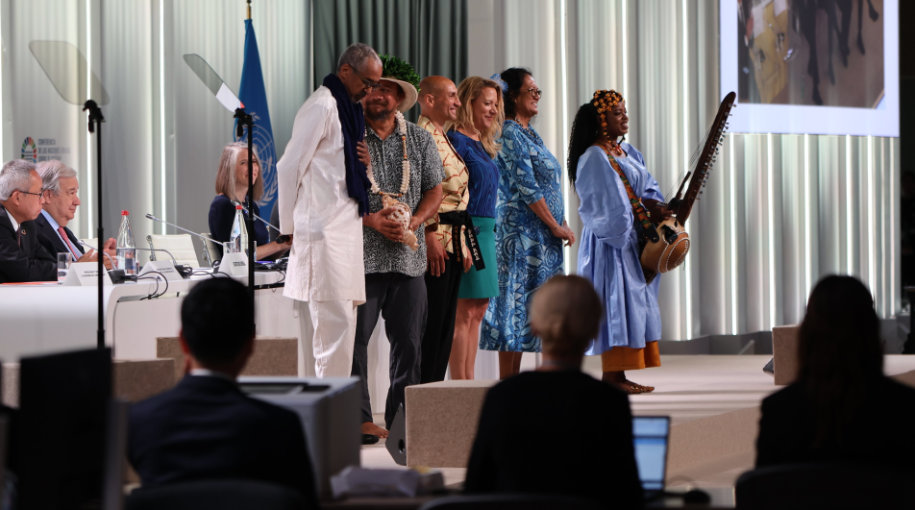
Indigenous Peoples have long been stewards of marine ecosystems, possessing invaluable traditional knowledge that contributes to sustainable ocean management. Yet their perspectives remain largely sidelined in international decision-making processes. At UNOC3, Indigenous Peoples’ representatives demanded a paradigm shift—one that integrates Indigenous knowledge into global policies rather than treating it as an afterthought.

Roberto Borrero, a representative of the International Indian Treaty Council, underscored the importance of inclusion: “UNOC3 is meant to build political will and action toward a healthy and sustainable ocean for our present and future generations. If Indigenous Peoples are not meaningfully a part of this moment, the next phase of ocean agreements will start on the wrong foundation.”
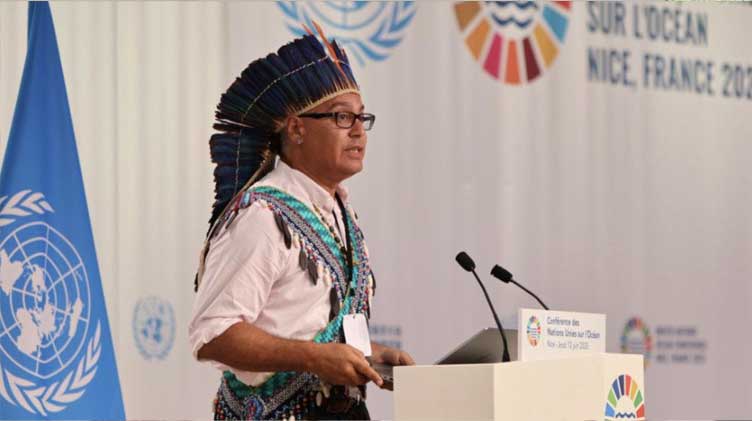


Johnson Jament, a researcher and educator specializing in ocean literacy, reinforced this message by highlighting the critical role of Indigenous communities in marine conservation. He emphasized that Indigenous Peoples are not only protectors of biodiversity but also knowledge holders with sustainable solutions. Jament, a vocal advocate for artisanal fishers, warned of the threats posed by industrial fishing, pollution and climate change to traditional fishing communities. His work underscores the need for Indigenous-led initiatives in ocean governance, ensuring that policies reflect the lived experiences and expertise of those who have safeguarded marine ecosystems for generations.

Jimrex Calatan of the Indigenous Peoples Major Group (IPMG) echoed these sentiments, emphasizing the disproportionate impact of ocean degradation on Indigenous communities: “Ecosystem-based approaches and nature-based solutions must be implemented through a human-rights-based lens, ensuring that Indigenous Peoples’ rights remain central in conservation efforts.”


Disappointment Over the Political Declaration

Despite strong representation of Indigenous Peoples at UNOC3, many leaders expressed frustration over the conference’s final political declaration, “Our Ocean, Our Future: United for Urgent Action.” While Indigenous Peoples welcomed references to their communities, they stressed that commitments must go beyond paper and translate into real action.

A glaring omission sparked widespread disappointment: the declaration contained no mention of human rights. Indigenous leaders and civil society groups had advocated for explicit recognition of human rights in ocean governance, particularly regarding environmental justice, Indigenous sovereignty and the rights of coastal communities, yet their demands were overlooked.

“This is a missed opportunity,” said a representative from an Indigenous Peoples’ coalition. “Without a human rights framework, ocean policies risk perpetuating the same injustices that have marginalized Indigenous Peoples for generations. Recognition is not enough; we need real commitments that protect our rights, our territories and our ways of life.”


The BBNJ Agreement: A Step Forward in Ocean Governance

A significant milestone in ocean governance, the Agreement on Marine Biological Diversity of Areas Beyond National Jurisdiction (BBNJ Agreement) was adopted on June 19, 2023. This legally binding treaty under the United Nations Convention on the Law of the Sea (UNCLOS) strengthens the conservation and sustainable use of marine biodiversity in areas beyond national jurisdiction—covering nearly two-thirds of the ocean.

As of the conclusion of UNOC3, 51 states had ratified the agreement, bringing it closer to the required 60 ratifications for entry into force. The treaty reflects a growing global commitment to protecting marine ecosystems and ensuring equitable access to ocean resources.

Indigenous leaders emphasized that ocean sustainability must be addressed holistically, rather than through isolated policy measures. UNOC3’s final declaration highlighted the need for inclusive decision-making, ensuring that Indigenous Peoples, women, youth and other marginalized groups are empowered in ocean-related policies. The adoption of the Nice Ocean Action Plan signaled a commitment to integrating Indigenous knowledge into marine conservation efforts.


Looking Ahead

While UNOC3 sparked momentum for ocean protection, Indigenous leaders remain cautiously optimistic. Commitments must translate into concrete actions, ensuring that Indigenous voices actively shape the future of ocean governance. As the world moves forward in tackling climate change, biodiversity loss and pollution, Indigenous Peoples must be recognized as key partners in safeguarding our oceans for generations to come.


To learn more about the Conference, visit the official website: https://bit.ly/UNOC2025

SAKATTABI Launches EU-Funded Rice Mill for Food Security, Self-Sufficiency and Livelihood

SAKATTABI Launches EU-Funded Rice Mill for Food Security, Self-Sufficiency and Livelihood

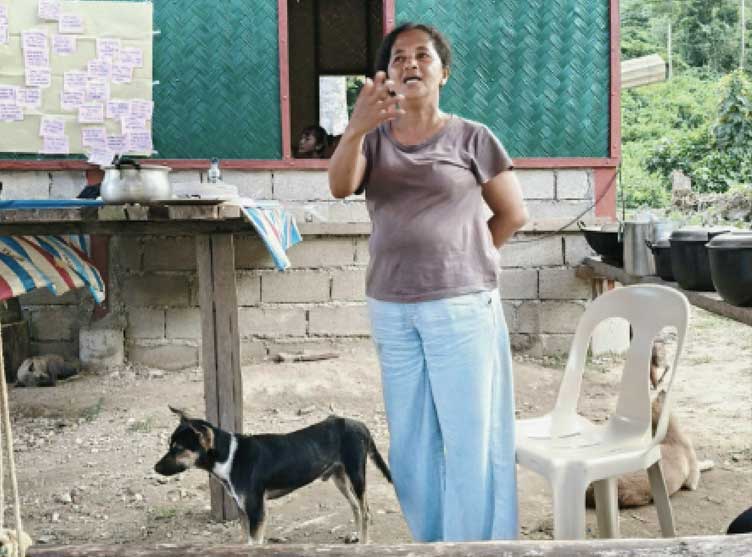
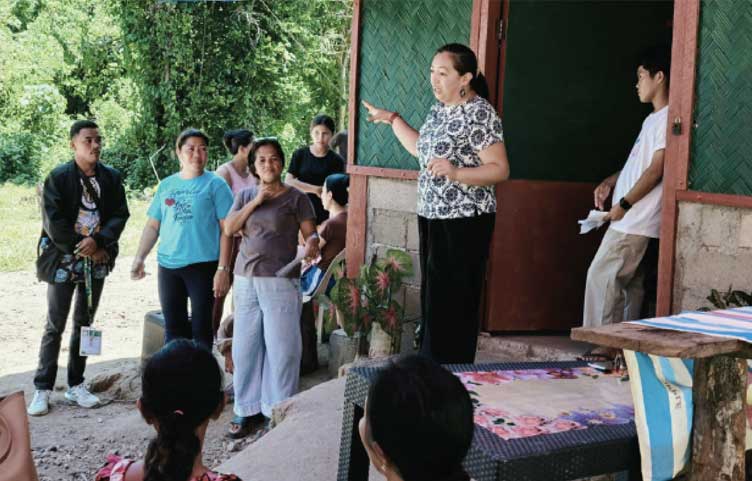
The Samahan ng Katutubong Tagbanuang Tandulanen sa Binga (SAKATTABI), an Indigenous Peoples’ organization located in San Vicente, Palawan, Philippines in a demonstration of self-determination, marked a major step toward food sovereignty and economic resilience. This milestone was celebrated with the official launch of their new community-built rice mill, ​​now operational and ready to serve the community. 

Funded by the European Union (EU) through Tebtebba Foundation, Inc. under the Indigenous Navigator (IN) Initiative in the Philippines, the small grant project was constructed by SAKATTABI members themselves. This ensured that the facility shall meet their needs while fostering a deep sense of ownership.


The two-day event opened by SAKATTABI President Elinita Orquestra expressing gratitude for the granted project. “Our deepest thanks to Indigenous Navigator for making this possible and to Johnmart Salunday, former President of NATRIPAL. Without your support, this project would not exist. This mill will sustain our families and inspire other Indigenous communities. We hope that this project will continue to support more Indigenous Peoples across Palawan,” she said.

San Vicente municipal and barangay Indigenous Peoples’ mandatory representatives (IPMRs), SAKATTABI officers and community members attended the event. Municipal IPMR Eddie Yayen reminded participants of their collective responsibility. “This gift comes with responsibility. Take care of it well, follow all agreements and ensure equal benefits for all members. May it bring abundant harvests for generations,” he said. 


Robie Halip, IN-IPMG Coordinator, offered a reflection: “We should not call this a turnover because this is your achievement; you designed and built it. The EU provided funding, but you built this with your own hands. While we gather support to implement projects for Indigenous Peoples communities, the true goal must always be self-determination. This mill belongs to you, by you and for your future,” she stressed.

Avilina Sappari, SAKATTABI secretary, shared a balik-tanaw (reflective journey), retracing their two-year process from initial planning to construction. Members recalled overcoming monsoon rains, material shortages and technical challenges through communal effort and Indigenous knowledge.


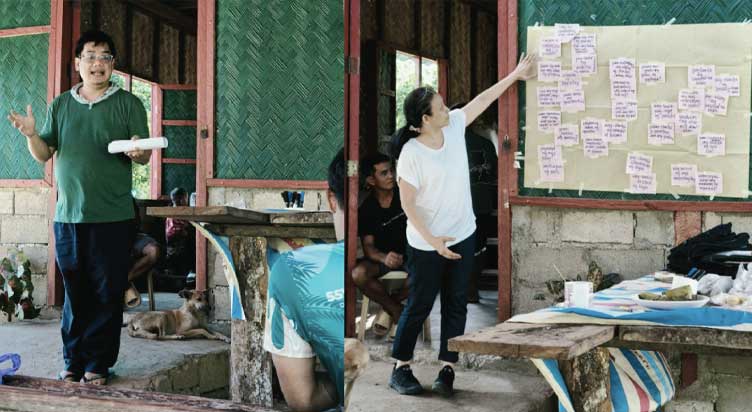
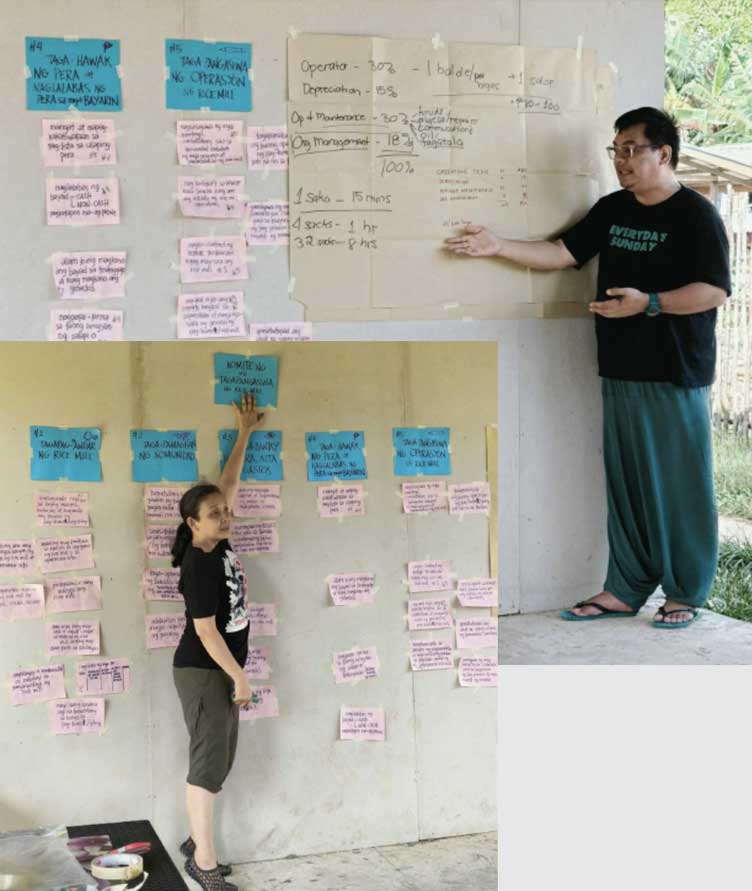
Following the morning ceremony, facilitators Gomer Padong and Jennifer Domingo from the Institute for Social Entrepreneurship in Asia (ISEA), led a visioning workshop where members discussed aspirations for the mill. They expressed hopes of producing high-quality rice, generating income for the community and expanding services to neighboring villages, underscoring the project’s potential to grow beyond subsistence into a sustainable livelihood source.

The rice mill, envisioned as a social enterprise, will enable the Tagbanuang Tandulanen to process their own harvests, reduce reliance on external sources and secure a stable food supply. “To prosper the rice mill, to supply not just us inside the community, but to the outside as well,” shared Avilina.


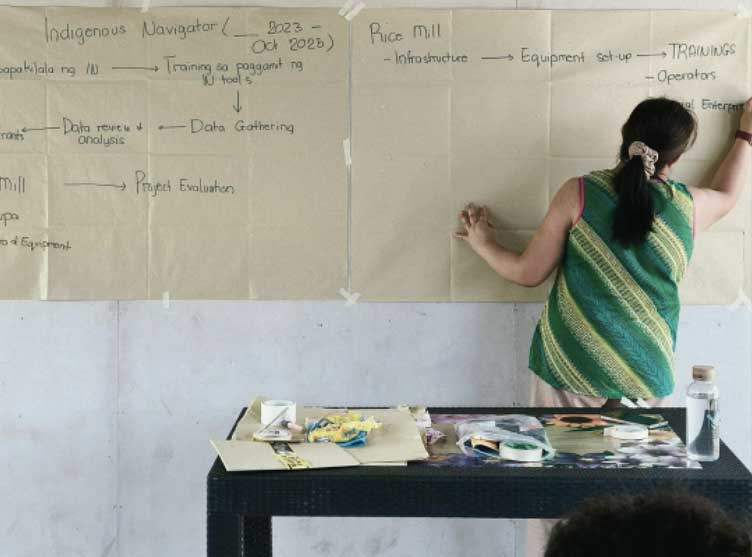
The second day focused on operational sustainability. Halip guided the community through a reflection on the project’s origins from the introduction of Indigenous Navigator tools, to initial data gathering that identified the rice mill as one of the prioritized needs to its realization through EU funding and evaluation. Key gaps were identified, including infrastructure upgrades (such as roof painting), additional equipment like rice filters (ayagan) and training for rice mill operators. 

Moreover, a basic financial planning session by Padong and Domingo showed how the mill could achieve profitability, while noting that SAKATTABI is formally registered as an organization but not yet as a business entity—an important step in preparing for its future as a social enterprise.


With the mill now operational, SAKATTABI looks forward to completing final facility upgrades, such as installing solar panels for independent energy sources, conducting member training programs and exploring the possibility of launching their community rice enterprise, all under their own leadership and governance systems. The project stands as a testament to Indigenous Peoples’ innovation, proving that when communities lead their own development, the results are both transformative and enduring.


The Indigenous Navigator (IN) Initiative was implemented by Tebtebba Foundation, Inc. in the Philippines with support from the
European Union (EU). 

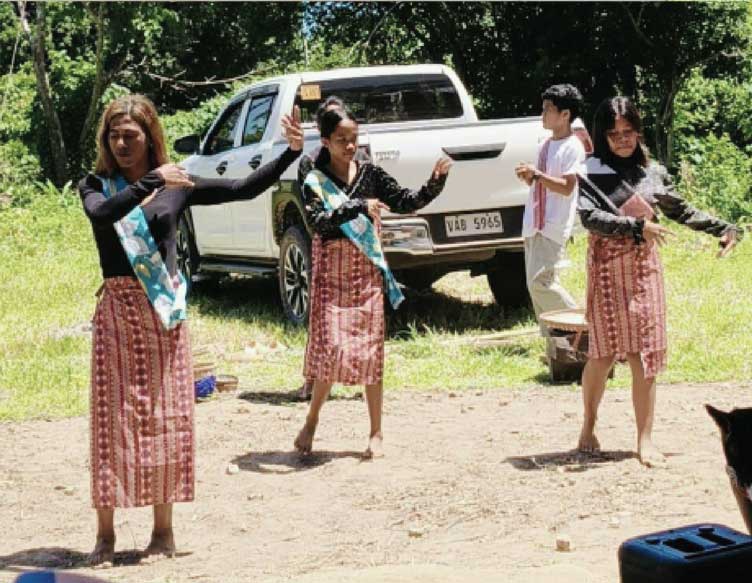
Tagbanuang Tandulanen youths performed a traditional dance to showcase their cultural heritage.

Marking Sacred Sites: A Journey into Culture, Spirituality and Nature

Marking Sacred Sites: A Journey into Culture, Spirituality and Nature

More than just a tourist attraction, the Bomod‑ok Falls holds a deeper meaning for the Indigenous Pidlisan community in Sagada, Mountain Province, Philippines. The Bomod‑ok Falls, known as “the big falls” of Sagada, derives its name from the word bod‑ok, signifying the powerful rush of water there. During the boso or “head‑hunting” period, these waterfalls served as a crucial panenchan (signal or warning) and played a pivotal role in safeguarding the village of Pidlisan. It was also believed that the sound of the water would change, forewarning the Pidlisan people of impending enemy attacks and prompting them to fortify their defenses. Beyond this, the Bomod‑ok Falls is considered a sacred site and continues to play an important role in Pidlisan rituals and traditions. It is frequently invoked in the prayers and chants of the elders, symbolizing both spiritual reverence and practical protection for the community.

In the northern part of Sagada, Mountain Province, the Pidlisan ancestral domain, composed of four barangays, namely Aguid, Pide, Fidelisan and Bangaan, can be found. The residents in these areas identify themselves as iPidlisan. The iPidlisan value different places that hold cultural and spiritual significance in their ancestral domains, which they consider sacred sites and part of their cultural and natural heritage. With a total area of 3,902.48 hectares, Pidlisan’s land is divided among several uses: watershed, pine forest, timberland, rice fields, unirrigated farmland, grassland, orchards, residential areas and a cemetery. It is home to 3,943 people, who make up 574 households and 616 families (Pidlisan Community‑Based Management Information System, Tebtebba, as cited in Española and Sidlakang Mindanao,  2021). These sacred sites can be located in forests, springs and mountains, among other areas, and differ in purpose, location and the specific rituals performed. They play a vital role in the Pidlisan community and in the lifestyle of its people. Sacred sites in the Pidlisan ancestral domain vary in size and nature.

Traditional practices, such as rituals carried out at sacred sites, serve as a vital link to the community’s past and play a key role in promoting their importance, including the transfer of knowledge to the next generation. This can be seen in the dap‑ay, a collective space where most rituals and decision‑making occur. These are important for protecting and managing the site in accordance with customary laws and policies.

In conserving and protecting these sacred sites, the Pidlisan community practices the principles of inayan and lawa, which embody the morals and values of honesty, commitment and truthfulness. These principles reflect the community’s relationship with their environment, especially as it is intertwined with their respect and care for their sacred sites. Documenting practices connected to these areas has enriched the community’s understanding of the significance of their traditions, which need to be maintained and passed on.


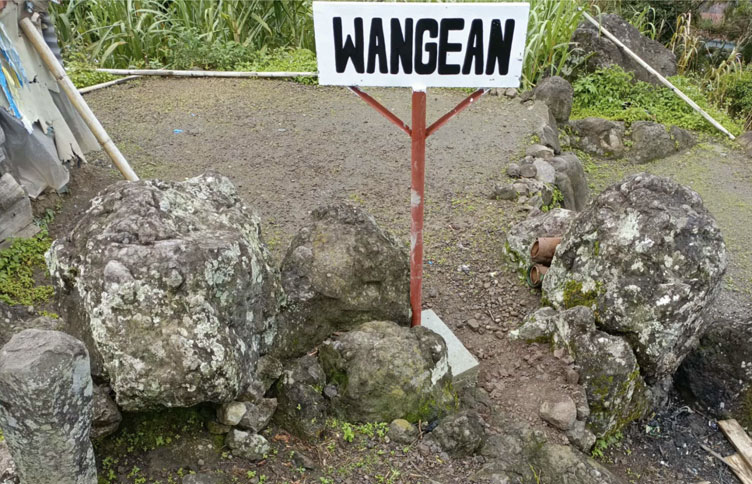
One of the cultural sites marked.


Currently, however, challenges brought by tourism and fast‑growing development projects, particularly infrastructure, have reshaped the structure of some practices and the status of sacred sites. Additionally, because of the kaingin system or swidden farming, sacred sites have been affected, left unrecognized by younger generations and disconnected from customary laws of governance.

These circumstances prompted the need to document all activities that threaten sacred areas and to propose policies and conservation measures. To address these issues, a People’s Organization called the Pidlisan Tribe Organization (PiTO) implemented a project entitled Safeguarding the Natural Heritage and Sacred Sites of the Pidlisan Ancestral Domain.  The goal of the project is to safeguard the natural heritage and sacred areas of Pidlisan through collaborative efforts with partner organizations, local government units and other stakeholders, securing their protection and preservation for future generations. The objectives were to list and document natural heritage and sacred areas, enhance community awareness and mitigate and monitor threats to sacred areas within the Pidlisan ancestral domain. Markers were placed at identified sacred sites to increase community awareness of their locations and help protect these areas.

In February and March 2025, a heritage walk was conducted in the mountains, forests, springs and communities within the ancestral domain. Elders, leaders, tribe members and other interested community members participated. These activities contributed to documenting traditionally important areas for the Pidlisan tribe that need to be filed and validated by the community. The sites marked include Pattong, Bangaan, Liwang, Secheyan and Bomod‑ok Falls, among many others. They also continue to reinforce their commitment to safeguarding ancestral lands for future generations through efforts in land‑use planning and resource inventory. In particular, the Pidlisan community has formulated policies to prevent the privatization of communal lands and individual ownership of portions within their ancestral domains. Their initiatives are grounded in Indigenous knowledge systems and practices (IKSPs) that emphasize the balance between human activity and ecological preservation.

These efforts directly contribute to the Kunming‑Montreal Global Biodiversity Framework (KMGBF), a comprehensive international strategy to address and remediate the decline of natural ecosystems, ensuring a sustainable environment for the future. Specifically, the KMGBF is guided by a set of goals and targets to be achieved by 2050. In line with this, their initiative contributes to Target 21 on biodiversity information and knowledge, particularly awareness‑raising and indirectly contributes to KMGBF Target 1 on biodiversity‑inclusive spatial planning and Target 14 on mainstreaming biodiversity in decision‑making.

Through visibly marking sacred sites within the Pidlisan ancestral domain, the iPidlisan community is raising awareness about the customary laws and values associated with these areas, while reinforcing their importance in community planning. This also contributes to activities stated in the Philippine Indigenous Peoples’ Biodiversity Strategy and Action Plan (IPBSAP), such as the intergenerational transmission of Indigenous knowledge (IPBSAP Target 14).

The journey of the Pidlisan community shows that sacred sites are more than cultural markers—they are living testaments to Indigenous resilience and ecological stewardship. By protecting these spaces and passing on their significance to future generations, the iPidlisan continue to uphold their identity while contributing to global efforts for biodiversity and sustainability.

Stories of Resilience: How “Finnachang”  Sustained Natonin, Mountain Province

Stories of Resilience: How “Finnachang” Sustained Natonin, Mountain Province

The Climate and Biodiversity Program (CBP) team of Tebtebba Foundation, Inc. recently conducted research documenting the effects of typhoon Rosita, which devastated Natonin, Mountain Province in the northern Philippines in 2018. Through a series of focus group discussions (FGDs) held from February 12–18, 2025, the team gathered narratives of finnachang (mutual help), loss and resilience from residents and Indigenous Peoples’ mandatory representatives (IPMRs) across the barangays of Natonin.

“In 2018, typhoon Rosita was the most devastating disaster to strike Natonin. All barangays were isolated; they had to survive on their own,” recalled Soledad Nasudman, the Local Disaster Risk Reduction and Management Officer (LDRRMO). She added that massive landslides severely damaged roads throughout the municipality, stalling rescue and relief operations and placing rescuers themselves at great risk.

Faced with isolation and stalled rescue efforts, residents and Indigenous communities turned inward to finnachang—a long-practiced Indigenous practice of mutual aid and cooperation, to withstand the odds brought about by typhoon Rosita. Despite their resilience, the typhoon claimed thirty-two lives, destroyed livelihoods and heritage sites and caused significant non-economic losses, including heightened anxiety during subsequent typhoon seasons and a persistent fear of a similar tragedy occurring again.

“When the landslides happened, I was completely overwhelmed. I couldn’t think straight; my mind was chaotic. My mother, my brother and my family were all gone. I felt so lost, so shattered. At that moment, I didn’t know what to do or how to go on,” shared Bernard Catet, an elder in sitio Batnong, barangay Banawel. He explained that his experience reflects the deep personal grief disasters leave behind, illustrating one of the many non-economic losses that natural calamities bring into the lives of their victims.

The FGDs provided a platform for residents to share not only their experiences of typhoon Rosita but also their knowledge and practices on disaster response and adaptation. Discussions included personal narratives, reflections on climate change impacts, recommendations for strengthening community resilience and the sharing of Indigenous practices, stories and myths that embody lessons on disaster prevention and climate adaptation.

During the community visit in barangay Banawel, Tebtebba Executive Director Helen Biangalen-Magata connected these local realities to the global climate crisis. She underscored that Indigenous Peoples are among the most vulnerable to the impacts of climate change, not because of their way of life, but because of the unjust pressures of global capitalism that exploit natural resources and disregard Indigenous Peoples’ rights. Biangalen-Magata emphasized that Indigenous communities, while carrying the heaviest burdens of the crisis, also hold generations of wisdom on how to care for forests, watersheds and biodiversity. “The world must listen to Indigenous Peoples,” she stressed, “because solutions to the climate crisis cannot rest on scientific facts alone. True solutions require Indigenous Peoples’ knowledge and justice for their struggles.”

The stories of finnachang in Natonin remind us that resilience is not just about rebuilding after disasters; it is about nurturing collective strength, interdependence and cultural knowledge that have sustained Indigenous Peoples for centuries. Practices such as finnachang are not only responses to crises but living systems of climate risk management rooted in solidarity and respect for the environment. As the climate crisis deepens, the world must recognize that Indigenous Peoples’ wisdom is not a relic of the past but a vital contribution to shaping more just, sustainable and adaptive futures.

Loss and damage refers to the adverse impacts of climate change that people and communities are experiencing despite mitigation and adaptation efforts. These impacts may stem from slow-onset processes, such as rising sea levels, melting glaciers, desertification and biodiversity loss, or from sudden extreme weather events, such as storms and floods. Catet’s grief and the community’s experiences in Natonin exemplify these non-economic losses, showing how disasters affect not only livelihoods but also emotional well-being and cultural continuity.

The research in Natonin is part of a broader study titled Environmental Justice is Indigenous Peoples’ Justice: Indigenous Peoples’ Experiences and Perspectives on Loss and Damage. Conducted by Tebtebba Foundation, Inc., with support from the University of Michigan.