

The third United Nations Ocean Conference (UNOC3), held in Nice, France from June 9–13, 2025, was a defining moment in global ocean governance. As part of efforts to advance Sustainable Development Goal 14 (SDG 14) Life Below Water, the conference aimed to accelerate action in conserving and sustainably using the ocean, seas and marine resources. However, beyond SDG 14, Indigenous leaders strongly advocated for an interconnected approach to the SDGs, urging world leaders to recognize that ocean sustainability cannot be addressed in isolation from other global challenges such as climate change, biodiversity loss, food security and Indigenous land rights.
The Fight for Inclusion in Ocean Governance
Indigenous Peoples have long been stewards of marine ecosystems, possessing invaluable traditional knowledge that contributes to sustainable ocean management. Yet their perspectives remain largely sidelined in international decision-making processes. At UNOC3, Indigenous Peoples’ representatives demanded a paradigm shift—one that integrates Indigenous knowledge into global policies rather than treating it as an afterthought.
Roberto Borrero, a representative of the International Indian Treaty Council, underscored the importance of inclusion: “UNOC3 is meant to build political will and action toward a healthy and sustainable ocean for our present and future generations. If Indigenous Peoples are not meaningfully a part of this moment, the next phase of ocean agreements will start on the wrong foundation.”
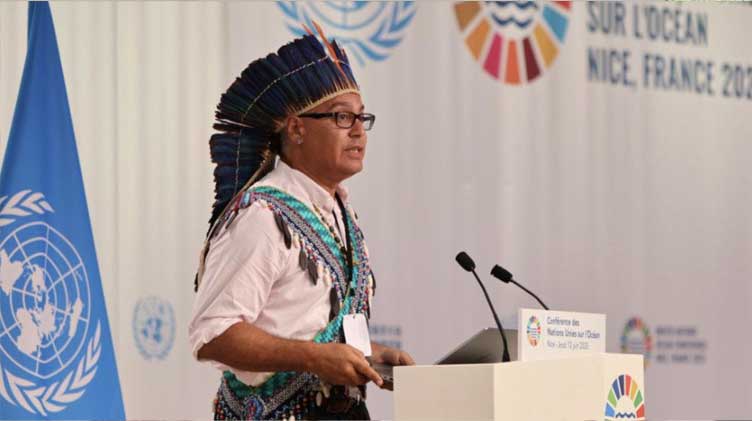
Johnson Jament, a researcher and educator specializing in ocean literacy, reinforced this message by highlighting the critical role of Indigenous communities in marine conservation. He emphasized that Indigenous Peoples are not only protectors of biodiversity but also knowledge holders with sustainable solutions. Jament, a vocal advocate for artisanal fishers, warned of the threats posed by industrial fishing, pollution and climate change to traditional fishing communities. His work underscores the need for Indigenous-led initiatives in ocean governance, ensuring that policies reflect the lived experiences and expertise of those who have safeguarded marine ecosystems for generations.
Jimrex Calatan of the Indigenous Peoples Major Group (IPMG) echoed these sentiments, emphasizing the disproportionate impact of ocean degradation on Indigenous communities: “Ecosystem-based approaches and nature-based solutions must be implemented through a human-rights-based lens, ensuring that Indigenous Peoples’ rights remain central in conservation efforts.”
Disappointment Over the Political Declaration
Despite strong representation of Indigenous Peoples at UNOC3, many leaders expressed frustration over the conference’s final political declaration, “Our Ocean, Our Future: United for Urgent Action.” While Indigenous Peoples welcomed references to their communities, they stressed that commitments must go beyond paper and translate into real action.
A glaring omission sparked widespread disappointment: the declaration contained no mention of human rights. Indigenous leaders and civil society groups had advocated for explicit recognition of human rights in ocean governance, particularly regarding environmental justice, Indigenous sovereignty and the rights of coastal communities, yet their demands were overlooked.
“This is a missed opportunity,” said a representative from an Indigenous Peoples’ coalition. “Without a human rights framework, ocean policies risk perpetuating the same injustices that have marginalized Indigenous Peoples for generations. Recognition is not enough; we need real commitments that protect our rights, our territories and our ways of life.”
The BBNJ Agreement: A Step Forward in Ocean Governance
A significant milestone in ocean governance, the Agreement on Marine Biological Diversity of Areas Beyond National Jurisdiction (BBNJ Agreement) was adopted on June 19, 2023. This legally binding treaty under the United Nations Convention on the Law of the Sea (UNCLOS) strengthens the conservation and sustainable use of marine biodiversity in areas beyond national jurisdiction—covering nearly two-thirds of the ocean.
As of the conclusion of UNOC3, 51 states had ratified the agreement, bringing it closer to the required 60 ratifications for entry into force. The treaty reflects a growing global commitment to protecting marine ecosystems and ensuring equitable access to ocean resources.
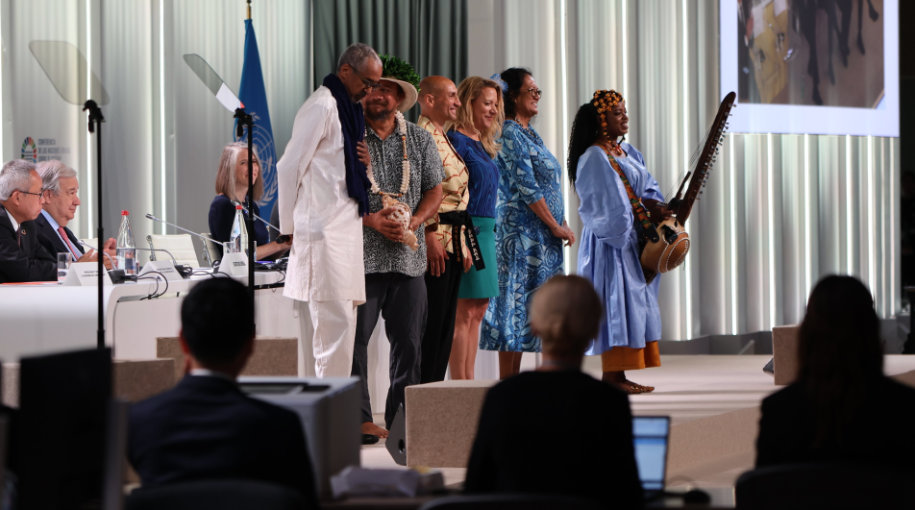
Indigenous leaders emphasized that ocean sustainability must be addressed holistically, rather than through isolated policy measures. UNOC3’s final declaration highlighted the need for inclusive decision-making, ensuring that Indigenous Peoples, women, youth and other marginalized groups are empowered in ocean-related policies. The adoption of the Nice Ocean Action Plan signaled a commitment to integrating Indigenous knowledge into marine conservation efforts.
Looking Ahead
While UNOC3 sparked momentum for ocean protection, Indigenous leaders remain cautiously optimistic. Commitments must translate into concrete actions, ensuring that Indigenous voices actively shape the future of ocean governance. As the world moves forward in tackling climate change, biodiversity loss and pollution, Indigenous Peoples must be recognized as key partners in safeguarding our oceans for generations to come.
To learn more about the Conference, visit the official website: https://bit.ly/UNOC2025