

This was an interview of Titay [Deputy Chieftain] Allan Olubalang of TJG conducted on December 17, 2025 in Langkat Itu, Looy, South Upi, Maguindanao del Sur, with contributions from Timuay Labi [Supreme Chieftain] Leticio Datuwata of TJG.
“From dependence on corn growing, agro-chemicals and debts, we now grow our food and earn income from the sales of our farm products. We began in 2022 to undertake actual work in reviving the sulagad, the Indigenous farming system of the Teduray and Lambangian peoples, through a cooperative. We learn and work together to produce our own organic fertilizers to grow the traditional crops that our ancestors cultivated. We raise chickens, pigs and cows. Recently, we started inviting our neighboring communities to join us in reviving our sulagad.”
In the 1970s, logging companies permitted by the state deforested the territories of the Teduray and Lambangian peoples in Maguindanao de Sur, Mindanao, Philippines. Some of the companies’ workers reclaimed the over-logged lands at a time when Masagana 99, a government agricultural program aimed at rice self-sufficiency, was at its peak. They adopted commercial corn production, which came with agro-chemicals and external financing. By the 1990s, people were forced to use their lands as loan collateral. Consequently, some farmers began selling their lands by the 21st century. Poverty remained widespread as families lacked food security and stable income.
As early as the mid-1990s, the Késéfanangguwit Timuay or Timuay Justice and Governance (TJG), the community’s customary government, called for the revitalization of the sulagad, which integrates short- and long-term crops with forest trees and animal raising. They saw this as a key solution to farmers’ poverty.
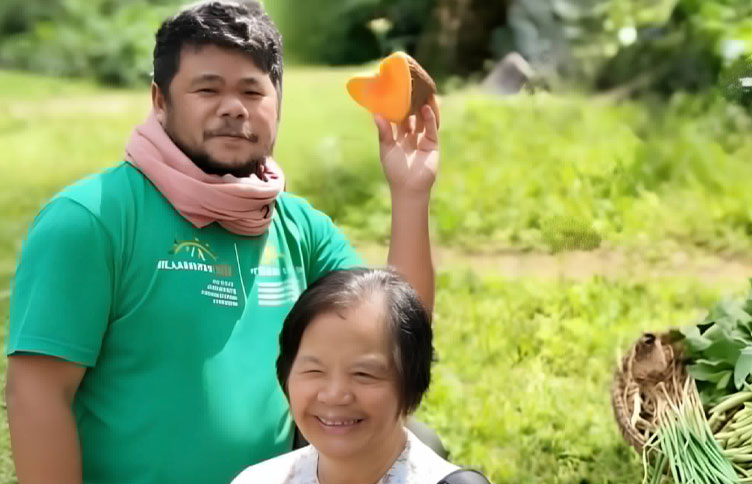
“I completed my bachelor’s degree in 2015 and joined the advocacy work of our leaders for the revival of sulagad. We campaigned relentlessly, even beyond our territories. In 2022, together with a few women and youth, we began the actual work in Sitio Senamflidon and Sitio Langkat Itu of Looy, South Upi, Maguindanao del Sur. We revived the sulagad in our home gardens, slowly expanding our farms and reaching neighboring villages. We produced our own organic fertilizers and planted diverse traditional crops. We sought supporters, and the United Nations Food and Agriculture Organization (UNFAO) provided a compost facility, which enabled us to increase our membership. We also acquired a building, providing space for training and equipment from the Ministry of Agriculture, Fisheries and Aquatic Resources (MAFAR). This strengthened our capacity to produce more organic fertilizers to restore soil health and fertility. Today, we supply safe and healthy food to two schools through the Home Grown School Feeding Program (HGSFP), in partnership with the World Food Programme (WFP) and the Ministry of Basic, Higher, Technical and Education (MBHTE).
We still have much to do. We need to produce more bio-solutions to restore soil health and expand our restoration efforts. Our vision is to make this community a training center for bio-solution production and an educational hub for the exchange of knowledge, bringing together the wisdom of our ancestors in agriculture and the present-day science of agroecology.”