

In the heart of Paracelis, Mountain Province in the Philippines, a quiet yet determined journey has been unfolding. For the people of Licoy, securing their certificate of ancestral domain title (CADT) is not only about legal recognition—it is about safeguarding their history and culture, recording Indigenous knowledge systems and practices (IKSPs), preserving genealogical memory and ensuring a future for generations to come.
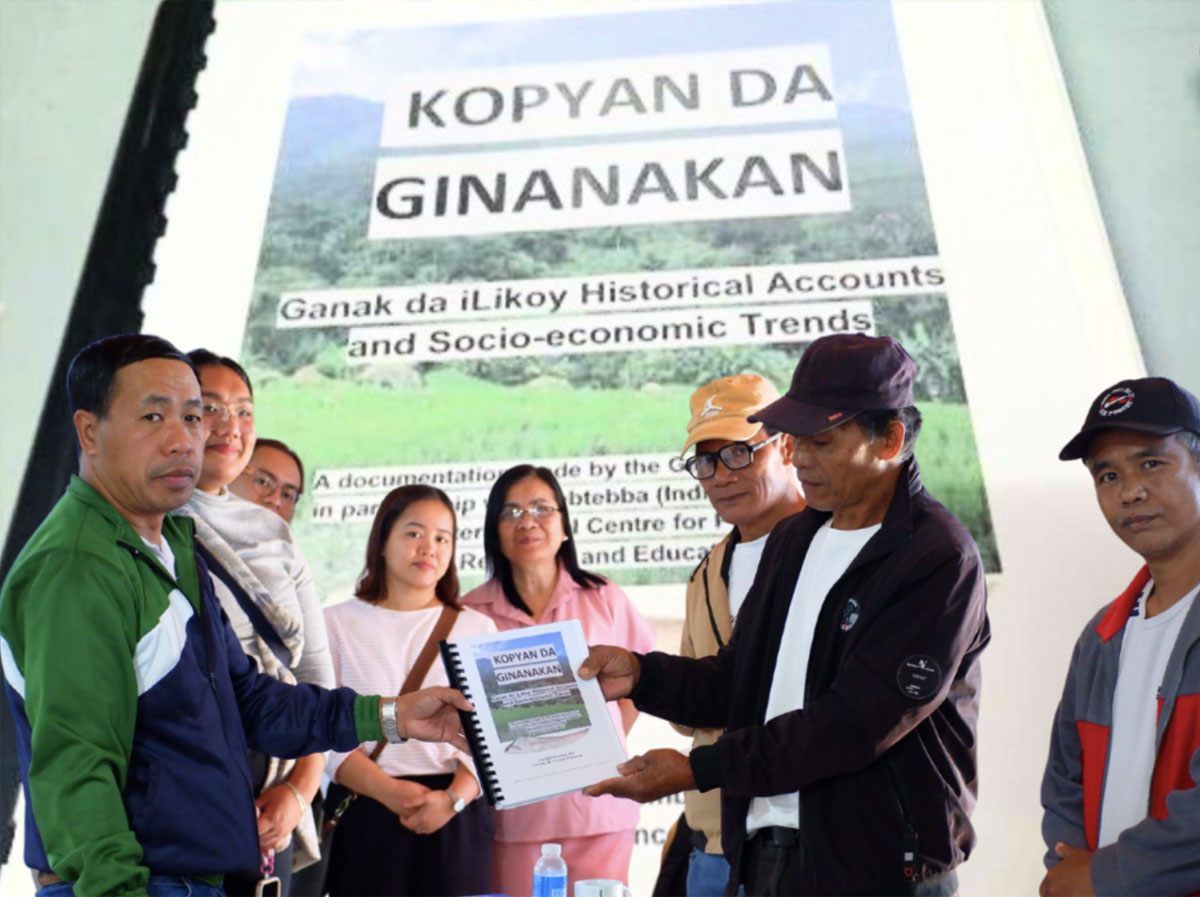
The research documentation entitled Kopyan Da Ginanakan was designed as a “recipe” for the Indigenous Likoy people’s CADT application, assembling everything from demographic data and genealogical histories to settlement records and livelihood profiles. But the process went beyond documenting facts. It sought to establish a baseline community profile that the Likoy people could use not only for their CADT application but also as a foundation for future development plans. Secondary data from local government units, health workers and disaster offices were also integrated, making the documentation both comprehensive and practical for governance and advocacy.
At the forefront of this effort is the Ganak da Ilikoy research documentation team, a painstakingly crafted body of work that has taken more than a year and a half to complete. Far from being just an academic exercise, the research has become a collective story of struggle, resilience and community ownership. The project was carried out in partnership with Tebtebba’s Philippine Program team.
Yet the work was never confined to researchers alone. Volunteers from the Indigenous community served as encoders and enumerators, elders as knowledge bearers and entire households took part in surveys and focus group discussions. Even when communication barriers arose–many elders had only basic phones or lived in areas with no signal–the community and the researchers found ways to bridge the gap.
The journey formally began in June 2022 with conceptualization, workshops and preparation of instruments. From June to December 2023, the team carried out data gathering, followed by validation and presentation of findings in 2024. Now in its final stages, the manuscript is being polished and will soon be turned over to the community for use in their CADT application. For many, it feels like they are coming close to resolution, though the road ahead remains long.
Into the Scope of the Journey
Fieldwork was as challenging as it was rewarding. Reaching barangay Licoy and its sitios, Babba and Bunot, in Paracelis required seven to eight hours by van or up to twelve by bus from Baguio City, followed by rough, winding roads and nearly an hour on foot. For the team, travel was a test of patience, but the long journeys also symbolized the distance the community was willing to go to protect their ancestral domain.
The methodology combined household surveys, key informant interviews and focus group discussions. Weekly meetings with elders ensured that no decision was made without the input of free, prior and informed consent (FPIC) of community representatives and leaders. Challenges included recruiting qualified enumerators and encoders, overcoming language barriers and addressing poor communication lines. These were resolved by using Ilocano as the common language, exercising patience and relying on personal visits when calls could not go through.
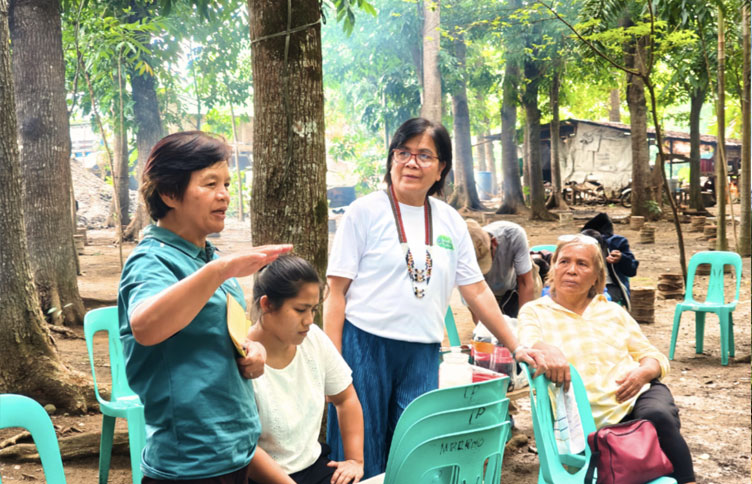
Community participation was overwhelmingly positive. Committees were formed voluntarily, local government offices readily shared secondary data and several validation sessions were held, including inside Tebtebba’s office where staff helped identify research gaps and technical inconsistencies to be addressed.
By June 22, 2024, the findings were formally presented to Licoy’s community leaders in Marat, Poblacion, Paracelis, Mt. Province. The event served not only to share results but also to reflect on lessons, address gaps and articulate the community’s vision moving forward.
In February 2025, the Tebtebba research team submitted an initial manuscript to the National Commission on Indigenous Peoples (NCIP) Paracelis–Natonin–Barlig (PANABA) officials through a courtesy call, marking another step toward advancing Licoy’s CADT application.
Beyond Documentation
For the Licoy community, the research is not an end in itself but a means to secure what has always been theirs. The CADT application represents both a legal and symbolic milestone under the Indigenous Peoples’ Rights Act (IPRA).
While the local NCIP and local government unit (LGU) initially proposed a consolidated CADT for all sub-tribes in Paracelis, Licoy stood firm in pursuing their own. Opposition from other groups only strengthened their resolve to complete independent documentation. As Garambas emphasized, “We encouraged them to participate for the benefit of their community. It is their community that will benefit most from the research output,” she said.
The process also laid the groundwork for community strengthening. Among its outputs is a muscovado processing center, a livelihood project directly tied to the research findings. Though not yet fully operational, it reflects the community’s vision of linking the pursuit of ancestral domain rights to tangible economic empowerment.
Still, challenges remain. The financial requirements for CADT processing are steep, estimated at nearly nearly ₱500,000 — equivalent to about $8,300. Yet the community is committed to moving forward, combining their baseline data with feasibility studies and livelihood planning to sustain their vision.
On Journey’s End
As the Ganak da Ilikoy research nears completion, its greatest achievement may be the sense of ownership it has fostered. The documentation is not just a requirement for CADT—it is a living record of a community’s unity, history and aspirations.
The road to full ancestral domain recognition is still long and winding, much like the paths to Licoy’s sitios. Yet with their own data in hand and their people strengthened by the process, the Licoy community has already traveled a significant part of the journey, together.
This research and the CADT certificate will not only help in asserting land rights but also serve as a foundation for economic independence, stronger community governance and comprehensive socio-economic development. True to the principles of FPIC and Indigenous Peoples’ sustainable and self-determined development (IPSSDD), it reflects a human-rights-based approach to research and advocacy, anchored in community will, participation and dignity.
The research documentation is supported by Tebtebba Foundation, Inc. and funded by SwedBio.