

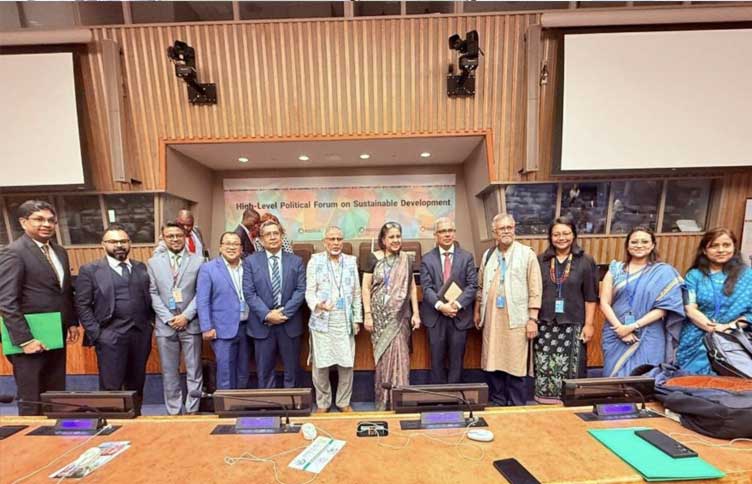
It was a privilege to participate in the 2025 High-Level Political Forum on Sustainable Development (HLPF), held from 14–23 July 2025 at the United Nations Headquarters in New York. I attended the event with the support of Tebtebba Foundation, Inc. and I am grateful to their team for their continuous support and cooperation.
I began my journey from Bangladesh on 13 July 2025 and arrived in New York on 14 July 2025, despite experiencing significant illness during the flight. Thankfully, I was able to recover enough to join the sessions from 15 - 18 July 2025.
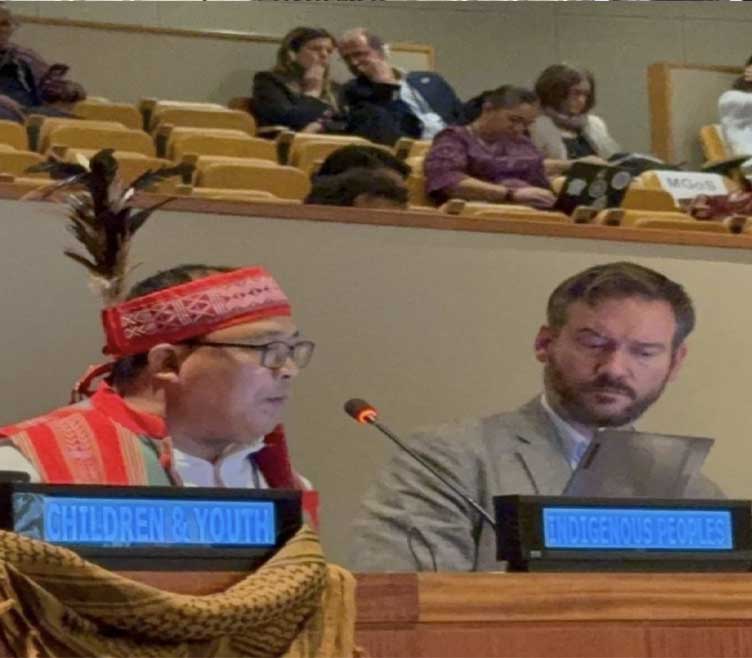
I attended several plenary sessions and side events. On 15 July, as one of the speakers at the side event Direct Partnerships with and Financing for Indigenous Peoples: Key to Strengthening SDG Implementation, I presented on how small grants are advancing Indigenous Peoples’ struggles for recognition of their land rights in Bangladesh—a central element for any development initiative to prosper and be sustained. This side event was co-organized by the Indigenous Peoples Major Group for Sustainable Development (IPMG) with the Indigenous Navigator Consortium, International Fund for Agricultural Development (IFAD), Indigenous Peoples’ International Centre for Policy Research and Education (Tebtebba Foundation, Inc.), United Nations Office of the High Commissioner on Human Rights (OHCHR) and the International Indian Treaty Council (IITC). I also delivered a statement on behalf of the IPMG during the official session on Transformation from the ground up: Acting at local level.
As this was my first time attending the HLPF, I expected the forum to be an inclusive space where governments, civil society and Indigenous representatives could engage in constructive dialogue on the sustainable development goals (SDGs). My primary expectation was to highlight the struggles of Indigenous Peoples in Bangladesh and ensure that their voices and concerns were reflected in global discussions on sustainable development.
Listening to various stakeholders was very inspiring. Delivering the IPMG statement at the plenary was empowering. The statement carries the collective voice of Indigenous Peoples worldwide, emphasizing rights-based development and the importance of free, prior and informed consent (FPIC). I felt proud to contribute to this global statement, which strongly resonated with the struggles of Indigenous communities in Bangladesh.
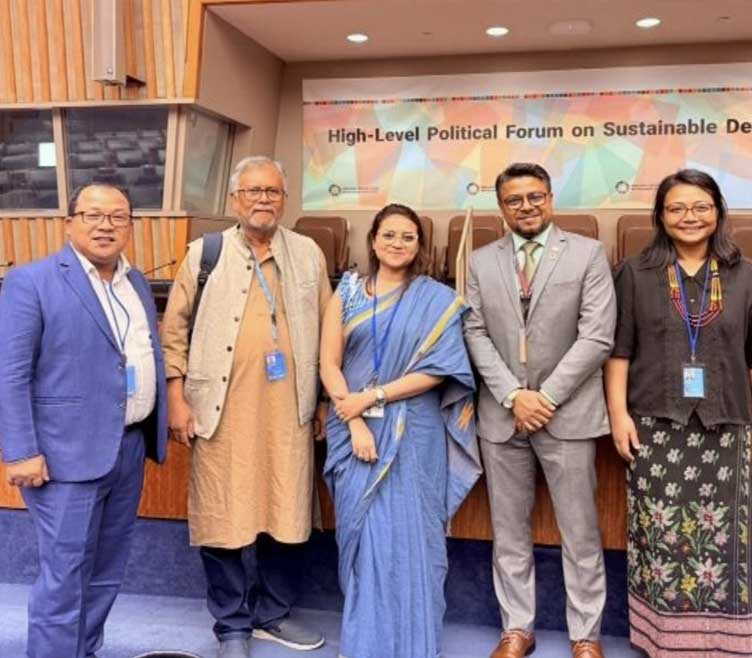
Between sessions and events, I was able to connect with fellow civil society organization (CSO) representatives from Bangladesh. These exchanges allowed us to continue the SDG-related discussions we had initiated back home and to align our advocacy strategies at the global level. Collaboration with my country colleagues enriched our engagement and reinforced the shared concerns of marginalized communities, including Indigenous Peoples and Dalits.
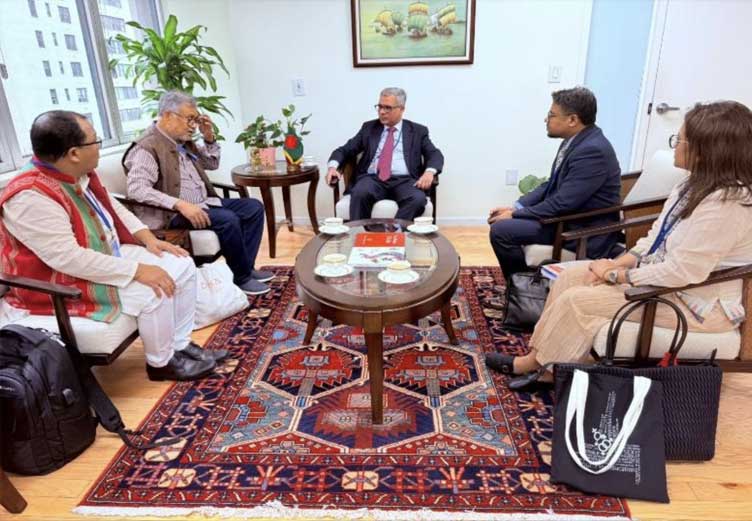
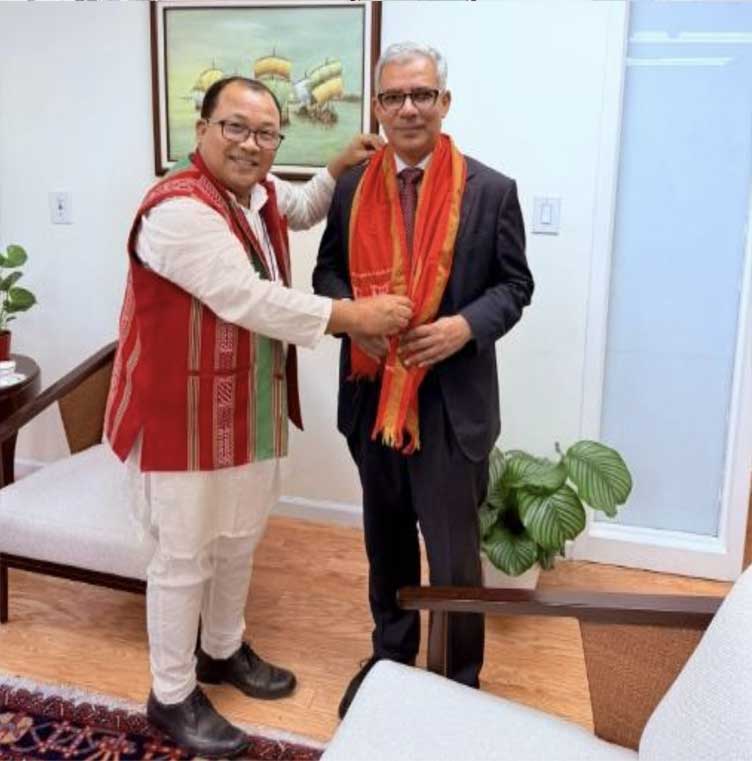
Our delegation had the opportunity to meet H.E. Mr. Salahuddin Noman Chowdhury, Ambassador and Permanent Representative of Bangladesh. During this meeting, I raised the pressing concerns of Indigenous Peoples in Bangladesh, particularly, around persistent challenges on the recognition of land and human rights and cultural identity. The Ambassador listened attentively and shared updates on Bangladesh’s efforts to implement the SDGs. Although much work lies ahead, this engagement created a valuable entry point for dialogues and continuing advocacy with government representatives.
More importantly, Indigenous Peoples’ concerns were acknowledged in the broader CSO statements. While the coverage was not comprehensive, it was encouraging to see recognition of Indigenous Peoples’ rights as a critical component of inclusive development. This inclusion also reaffirmed the importance of strengthening the representation of Indigenous voices in global civil society platforms and decision-making processes.
Despite health challenges during travel, the overall experience was highly rewarding. Networking with Indigenous leaders, UN officials and civil society representatives broadened my understanding of global Indigenous movements and built solidarity for future collaboration. It also highlighted the resilience required to represent communities at such high-level platforms.
My participation in the 2025 High-Level Political Forum was truly a meaningful experience for me. It provided me with a platform to raise the concerns of Indigenous Peoples of Bangladesh, while also connecting with fellow CSOs, government representatives and global Indigenous leaders. The discussions and engagements reaffirmed that Indigenous Peoples are not merely beneficiaries of development but active agents of change who must be at the center of SDG implementation.
By observing high-level global discussions and sharing local realities on international platforms, I gained valuable insights on how to frame Indigenous issues within the SDG framework. This exposure has also enhanced my confidence and capacity to engage more strategically with government, civil society and international actors
This experience has strengthened my commitment to advance advocacy at both national and international levels, particularly, on Indigenous Peoples’ call for the recognition of land rights, cultural identity and inclusive development. Moving forward, I will apply the lessons, networks and inspiration gained from the HLPF to ensure that the voices of Indigenous communities in Bangladesh are heard, respected and reflected in policies and actions that shape our shared sustainable future.
Some of my personal recommendations include the strengthening of the inclusion of Indigenous concerns in both CSO and government positions at international forums and support to leadership development for indigenous youth and women to ensure intergenerational continuity in advocacy. In addition, fostering stronger partnerships between grassroots initiatives and international processes is crucial to bridging local realities with global agendas. Finally, continuing to document and share lessons learned from local projects will help amplify the visibility of Indigenous struggles and successes.