Biodiversity conservation at the local level has been globally recognized as one of the most effective and practical approaches for achieving both short-term and long-term goals. In particular, community-driven actions of Indigenous Peoples—grounded in Indigenous knowledge, value systems and customary practices—enrich the body of information available for developing more robust and context-specific conservation instruments. These contributions highlight and strengthen the vital role of Indigenous communities in sustaining and protecting biodiversity. To further enhance Indigenous Peoples’ capacities for biodiversity conservation, training on biodiversity assessment of fauna and flora in their ancestral domain was conducted among the Dumagat and Alta, the Indigenous Peoples in San Luis, Aurora in northern Philippines. Tebtebba’s Climate and Biodiversity Program Staff, Marilyn Dela Torre, shared technical inputs during the activity aimed at strengthening the capability of participants to undertake biodiversity assessments.          Participating in the training held on February 13–16 were 25 representatives from Indigenous communities in Barangays Real, Dibalo, Dibut and Dikapinisan, along with members of Daluhay Daloy ng Buhay,  a member of the Dipaculao Egongot Tribe Association (DETA) representing the Indigenous Peoples in Aurora’s northernmost part and the Barangay Council of Dibut, the host community. The activity forms part of the ongoing implementation of the Samahan ng Bantay Kalikasan at Lupaing Ninuno (SUBKAL’N) project, supported through the Small Grants Programme Seventh Operational Phase under the funding assistance of the United Nations Development Programme (UNDP). It was led by SUBKAL’N, an Indigenous Peoples’ organization based in San Luis, which focuses on biodiversity conservation within their ancestral domain and on strengthening traditional governance and management.  The target outputs from the activity will be used for updating the Community Conservation and Protection Plan (CCPP) of Dibut ancestral domain. This local instrument serves as a living document that contains the commitments and actions targeted by the Dumagat and Alta peoples for the protection and conservation of their ancestral domains.  In addition, the activity provided an opportunity for Tebtebba to explore a possible engagement with the Dumagat and Alta peoples in Aurora, who are advocating for their rights to govern and manage their ancestral domain and strengthen their traditional governance.
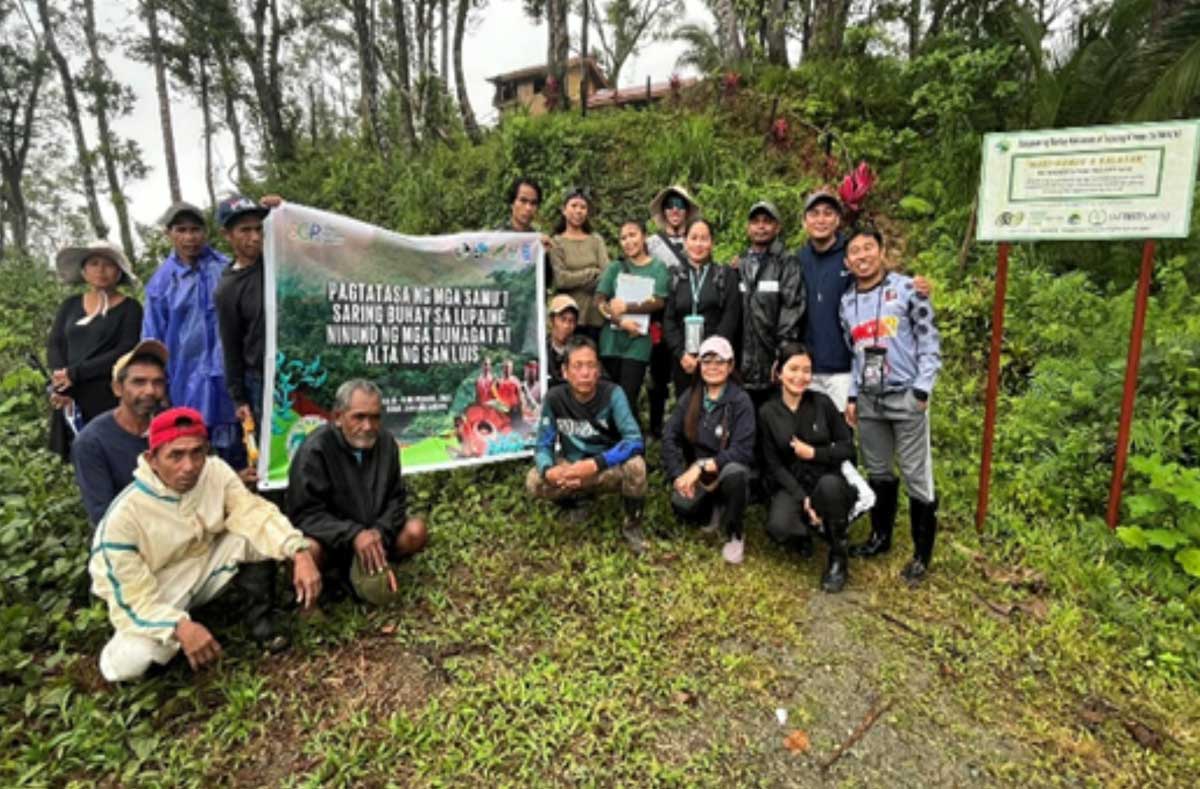
Community-led action for Biodiversity Conservation: Fauna and Flora Assessment within Indigenous Peoples’ Territories in Aurora

Biodiversity conservation at the local level has been globally recognized as one of the most effective and practical approaches for achieving both short-term and long-term goals. In particular, community-driven actions of Indigenous Peoples—grounded in Indigenous knowledge, value systems and customary practices—enrich the body of information available for developing more robust and context-specific conservation instruments. These contributions highlight and strengthen the vital role of Indigenous communities in sustaining and protecting biodiversity.

To further enhance Indigenous Peoples’ capacities for biodiversity conservation, training on biodiversity assessment of fauna and flora in their ancestral domain was conducted among the Dumagat and Alta, the Indigenous Peoples in San Luis, Aurora in northern Philippines. Tebtebba’s Climate and Biodiversity Program Staff, Marilyn Dela Torre, shared technical inputs during the activity aimed at strengthening the capability of participants to undertake biodiversity assessments. 


Participating in the training held on February 13–16 were 25 representatives from Indigenous communities in Barangays Real, Dibalo, Dibut and Dikapinisan, along with members of Daluhay Daloy ng Buhay,  a member of the Dipaculao Egongot Tribe Association (DETA) representing the Indigenous Peoples in Aurora’s northernmost part and the Barangay Council of Dibut, the host community.

The activity forms part of the ongoing implementation of the Samahan ng Bantay Kalikasan at Lupaing Ninuno (SUBKAL’N) project, supported through the Small Grants Programme Seventh Operational Phase under the funding assistance of the United Nations Development Programme (UNDP). It was led by SUBKAL’N, an Indigenous Peoples’ organization based in San Luis, which focuses on biodiversity conservation within their ancestral domain and on strengthening traditional governance and management. 

The target outputs from the activity will be used for updating the Community Conservation and Protection Plan (CCPP) of Dibut ancestral domain. This local instrument serves as a living document that contains the commitments and actions targeted by the Dumagat and Alta peoples for the protection and conservation of their ancestral domains. 

In addition, the activity provided an opportunity for Tebtebba to explore a possible engagement with the Dumagat and Alta peoples in Aurora, who are advocating for their rights to govern and manage their ancestral domain and strengthen their traditional governance.