

The Késéfanangguwit Timuay or Timuay Justice and Governance (TJG), the Indigenous political structure (IPS) of the Teduray-Lambangian in Bangsamoro Autonomous Region of Muslim Mindanao (BARMM) has reported a significant increase in killings of their members. As of February 2026, at least 103 non-Moro Indigenous Peoples (NMIPs) have been slain since 2014 within the territories of Teduray-Lambangian communities. Among those were women, youth and children. These incidents were reported to the Philippine National Police (PNP), but many of these are still unsolved.
These killings are mainly attributed to land disputes, paramilitary or armed group harassment and NMIP resistance against ancestral domain land grabbing.
Key Incidents
In February 2025, a Teduray-Lambangian leader, Fernando Promboy, was found dead and decapitated in his farm in Sitio Bagurot of Barangay Tuayan Mother in the municipality of Datu Hoffer Ampatuan, Maguindanao del Sur, his body already decomposing. His hands were reportedly tied with a rope.
On 30 September, a day before the onset of the national celebration of Indigenous Peoples’ Month 2025, Ramon Lupos, a Teduray-Lambangian tribal leader, was shot and beheaded also in Datu Hoffer Ampatuan. Lupos previously left his home to evade such a death threat.
Similar cases have been documented by the TJG and the Climate Conflict Action, which were previously presented in a series of congressional hearings late last year attended by Timuay Labi (Supreme Leader) Leticio Datuwata. The overall leader of the Teduray-Lambangian, Timuay Labi Datuwata emphasized that most of these killings remain unsolved and often involve unidentified armed entities.
In a statement dated 4 October 2024, the Commission on Human Rights (CHR) also denounced these killings. The Commission called on the government to “enhance the protection of Indigenous Peoples” and “increase awareness of their struggles and work toward enacting laws and policies that offer comprehensive protection against harassment and violence.”
Political Interference and Displacement
While many of these cases are due directly to ancestral land conflicts, others are politically motivated. The killing of Barangay Councilor Elvin Moires, a fenuwo timuay (village chieftain) in an ambush in Barangay Bongo, South Upi, Maguindanao del Sur on 17 September 2024 was believed to be politically driven. According to Datuwata, Moires was a “vocal advocate on issues affecting Indigenous Peoples’ communities, including land grabbing, harassment and displacement caused by the presence of armed groups.” Moires had previously survived a similar attack in 2018. These sorts of killings are believed to discourage NMIPs from taking government leadership positions that could help secure ancestral land ownership titles.
In addition, around 3,000 members of the Teduray-Lambangian communities have fled their homes due to similar threats against their lives, causing displacement from their ancestral domain.
Context and Cause
These killings are not random—they are targeted—and are often due to ancestral land conflicts, as the Teduray-Lambangian have a standing claim over about 208,154 hectares of ancestral domain mainly situated in Maguindanao del Sur, Maguindanao del Norte, and Sultan Kudarat. Outside interest in these lands often involves mining or agribusiness ventures.
Government Intervention and Protection
While the National Commission on Indigenous Peoples (NCIP) has condemned the NMIP killings in the BARMM and repeatedly calls for the end of this “culture of impunity,” holding those accountable requires more than just these pleas and reminders. The need to address these killings must come in some form of effective set of interventions—in-depth investigation, litigation and imprisonment of those found guilty as well as genuine acknowledgement, respect and protection of Indigenous Peoples’ rights in all areas and levels of government. All these, among others, are necessary, as enshrined both in the Indigenous Peoples’ Rights Act of 1997 (Republic Act 8371) and the UN Declaration on the Rights of Indigenous Peoples.
Timuay Labi Datuwata described the situation as being “under siege,” as NMIP leaders are being increasingly hunted down within their own ancestral domain since the passage of the Bangsamoro Organic Law (BOL) in 2018. He called for an urgent investigation on the security situation of NMIPs in the BARMM as well as a means of protection as attacks against them intensify.
On 31 March 2025, Philippine Senator Loren Legarda filed Senate Resolution No. 1329, calling for an inquiry on the “situation and security of NMIPs in BARMM.” "These significant discrepancies among the records highlight the urgent need for independent validation, comprehensive investigation and reinforced protection measures to hold perpetrators accountable while safeguarding NMIPs from further risks, threats, endangerment and violence,” she said.
This would be addressed in a series of national congressional hearings, which tackled the same problem. In the 3 December 2025 hearing, one of the recommendations was to create an intergovernmental task force to investigate the NMIP killings. Consequently, on 20 December 2025, an Executive Order (EO) was discussed and drafted for submission to President Ferdinand Marcos Jr., by February 2026. The EO would establish a Task Force mandated to (1) investigate these killings and provide appropriate legal action, (2) offer timely delivery of humanitarian assistance to victims, their affected families and displaced communities, and (3) create a centralized database of all reported NMIP killings as well as ensure the direct and meaningful participation of NMIPs in all processes affecting their rights, including, but not limited to, the preparations for Camp Transformation Plans in their area.
Positive Outlook: EO Implementing Rules and Regulations and CADT Awarding
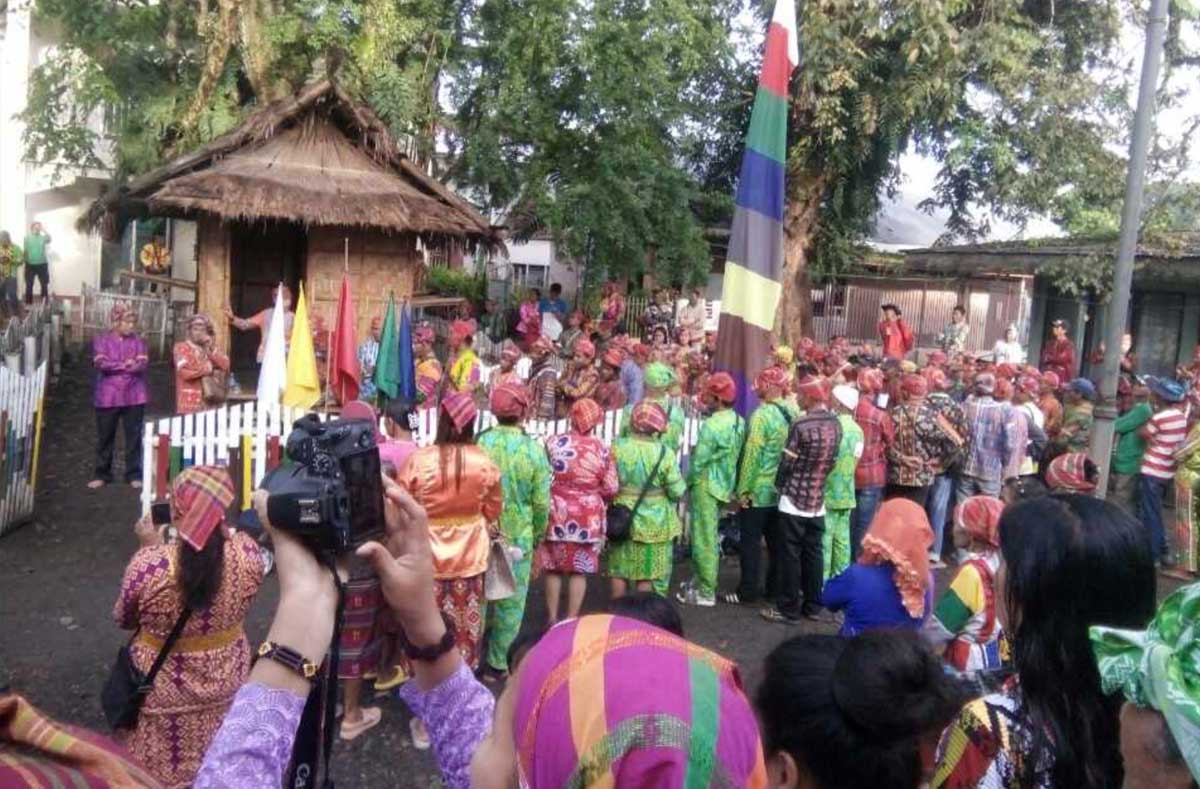
In line with the much-awaited resolution on the increased NMIP killings in the BARMM, the Teduray-Lambangian are also anticipating the results of their long-standing fight for their Certificate on Ancestral Domain Title (CADT), which was filed on 5 August 2005 through the Office for Southern Cultural Communities. Twenty years after the filing, the possibility of finally receiving their CADT has been announced. As promised by the BARMM Ministry on Indigenous Peoples’ Affairs and the NCIP, their CADT is scheduled to be awarded to them after a series of dialogues with the NMIPs. The Ministry of Environment, Natural Resources, and Environment (MENRE) is preparing the CADT, which was expected to be awarded before June 2026.
Given these updates, the Teduray-Lambangian are awaiting positive results. Security among their leaders and members has tightened as death threats have increased. If the submitted EO to the President is approved and signed, the development of Implementing Rules and Regulations and its subsequent implementation will be the next critical step to monitor.
The CADT awarding is another milestone to look forward to. While awaiting this, it is also crucial to monitor the security situation of NMIPs in the BARMMr, actively working to ensure that no more NMIPs are killed. (with inputs from Maribeth Bugtong-Biano and data from Leticio Datuwata)