

North Cotabato in southern Philippines is a place where the mist often clings low and covers every ridge like a thick white veil that hides the beauty of the valleys from atop the highlands to the lands below, manifesting the sacredness of the ancestral lands of the Manobo people. The mist, however, does not only hide the beauty of the place but also the quiet struggles of the Indigenous Peoples who call the ridges their home.
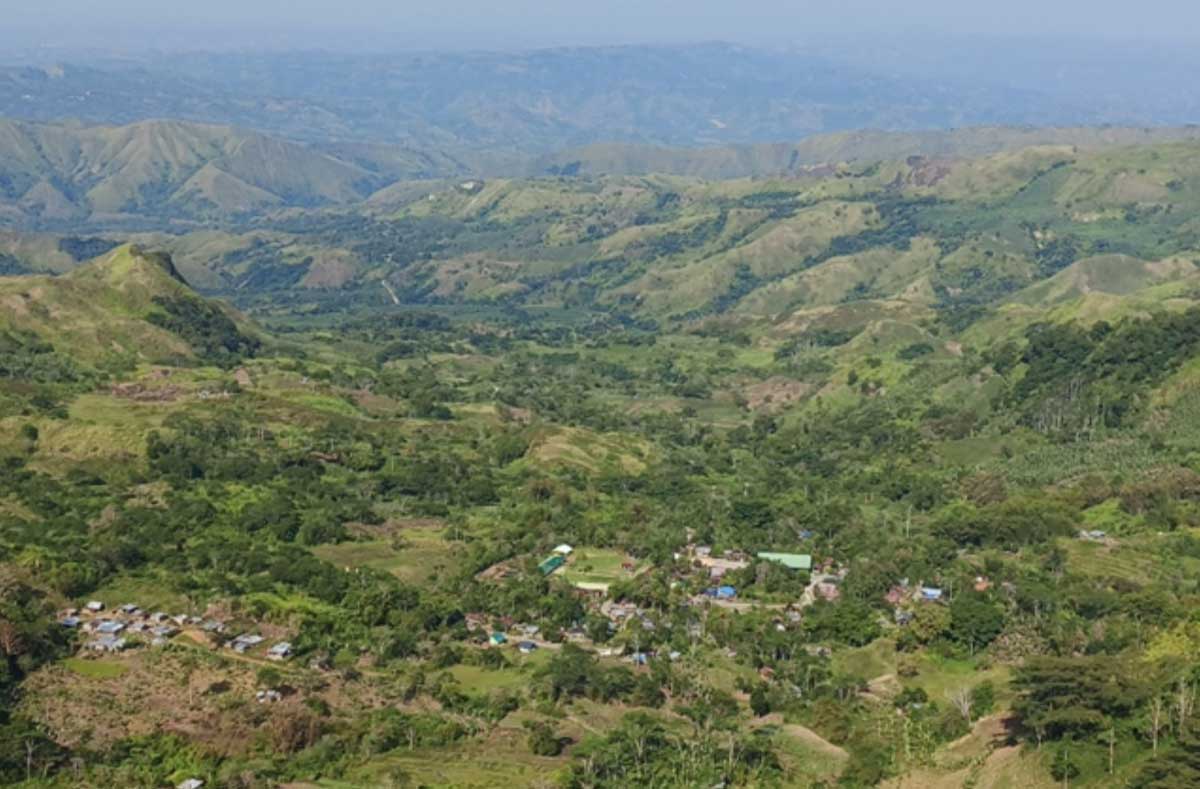
Portion of the Kulamanen Manuvu ancestral domain (top) viewed from the peak of Mount Sumalili (down).
In the shadows of Mount Apo, Mount Sinaka, and atop the peak of Sumalili, the Tinonanon Monuɓû, Obo Manobo and Kulamanen Manuvu peoples are continuously engaged in a profound act of survival, striving to reclaim their collective identity and to protect their lands and sovereignty. Their struggles came to light during the community visits under the Ugnayang Pambansa para sa Katutubong Kaalaman at Talino (UPAKAT) conducted by Tebtebba Foundation, its interim secretariat, on 14–22 March aimed at deepening the knowledge about the Indigenous Political Structures (IPS) of the three Indigenous communities and their current issues, concerns and initiatives.
Challenges
In the community of the Kulamanen Manuvu people, the air is often filled with the scent of damp earth, cool breeze and the memory of the Philippine eagle’s whistle. But lately, a different atmosphere has settled over the people. With the passing of their Supreme Chieftain, the tribe finds itself at a crossroads, facing a void in leadership just as the pressures of the modern world intensified.
For years, the high-input, low-value trap of commercial monocrop farming of corn and banana has scarred the steep slopes of the Kulamanen Manuvu lands with erosion and mired their families in debt. Many have been forced to become tenants on their own soil, renting their land to outsiders to cover food, tuition and allowances of children as well as health emergencies. The illusion that “getting more from leasing their lands than tilling them on their own” is now fast becoming a reality, threatening their sovereignty over their own ancestral domain. For what reason do they believe this to be so? Unfortunately, their unpaved and muddy roads make it very difficult for them to market their produce, and with the low buy-out of their products and high labor and input expenses, the offer of cutting cost and getting paid instantly for working their leased lands seems the better choice.
Meanwhile, the children are getting more unfamiliar with their roots as they become more engrossed with social media, spending their days on cellphones, while women could only hope of weaving and sewing their fabrics and decorating their heads and necks with beads having no means to support this endeavor.
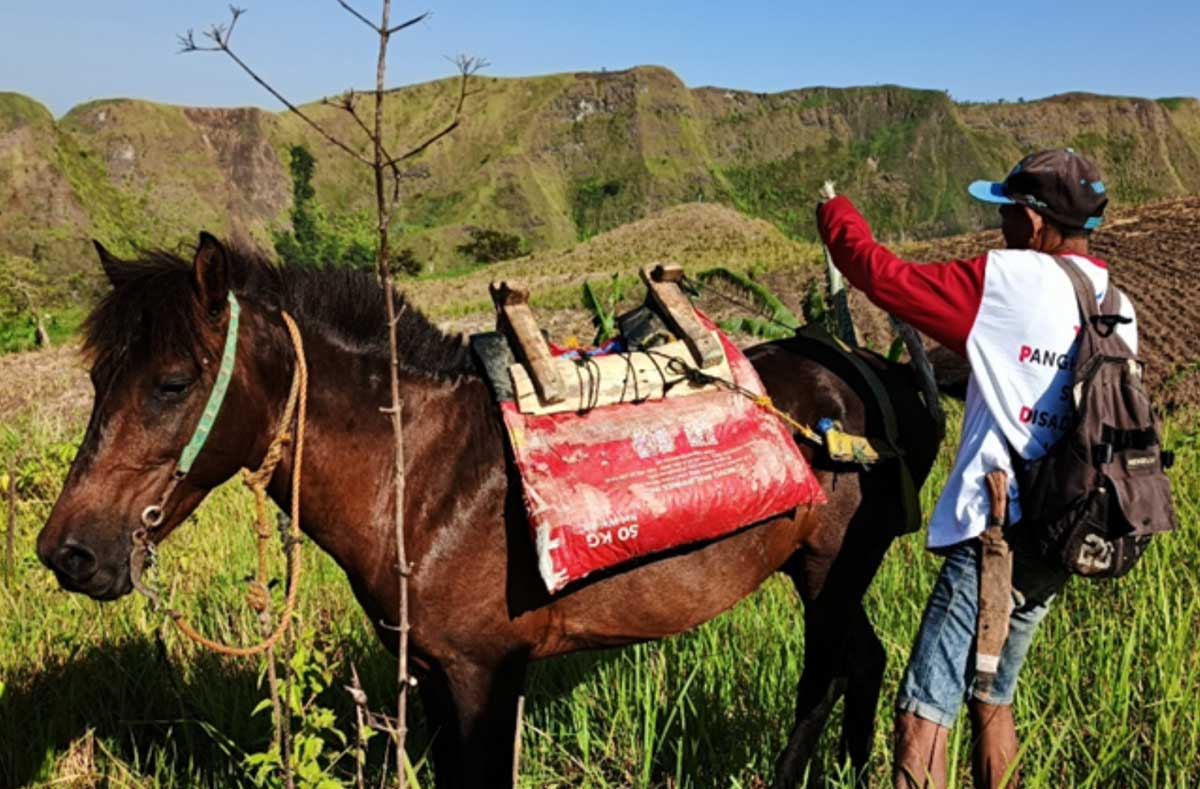
A Kulamanen elder embarking from his horse after delivering farm inputs to be used for planting corn and peanuts.
But the elders are now reaching back into their origin stories to boost community morale. They speak of the egg story of their ancestor, Apo Kulalang. According to them, Apo Kulalang demonstrated their strength as a people when he led his brothers to float an egg in the great river and let it stream downward, challenging the aggressive waterflow, bumping on rocks and never cracking until it reached their sister downstream. “An egg in the rushing water does not fight the current but, instead, floats over it,” he said. This philosophy reflects the way of life of the Kulamanen Manobo people.
The elders teach the youth that they should stay whole and stand tall amidst the challenges. This spirit of resilience is manifesting in the Bagani system where traditional warriors are formalized as bantay gubat (forest guards) to defend their lands and forests against intruders. In the heart of their villages, leaders discuss and negotiate their community protocols in relating with investors, ensuring that outside interests do not go beyond the allowed area to be rented out and that authority rests with the community.
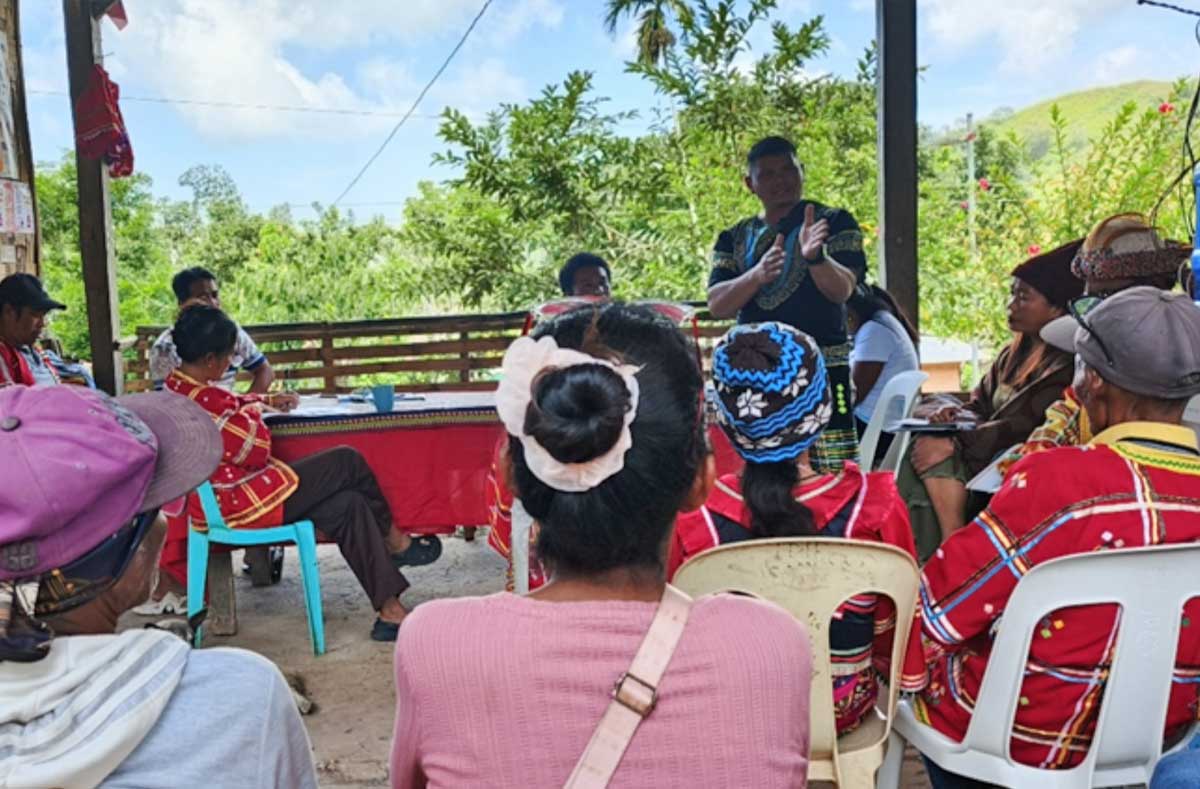
Snaps during the focus group discussion on community issues and concerns and IPS updating of elders and leaders of the Kulamanon people in Barangay Sumalili, Arakan.
In the rugged terrain of Magpet municipality, the Obo Manobo face a different kind of displacement. Their ancestral lands are often cordoned off by state-mandated protected areas, turning their traditional agriculture and forest management into a criminal act. Development projects are poured into the community to provide alternative livelihoods, encouraging them to forgo harvesting forest resources. While this seems a good option, the peoples’ indigenous ways are being displaced. Instead of the community’s staples like rice and vegetables, tahiti (tiger grass) and bananas grow on their lands. They harvest these, process the tahiti into soft brooms and sell the bananas directly in the trading centers. Their produce is priced so low they can only buy a few kilos of rice, and instead of meat and vegetables what remains can only purchase inexpensive processed foods like sardines, hotdogs and instant noodles.
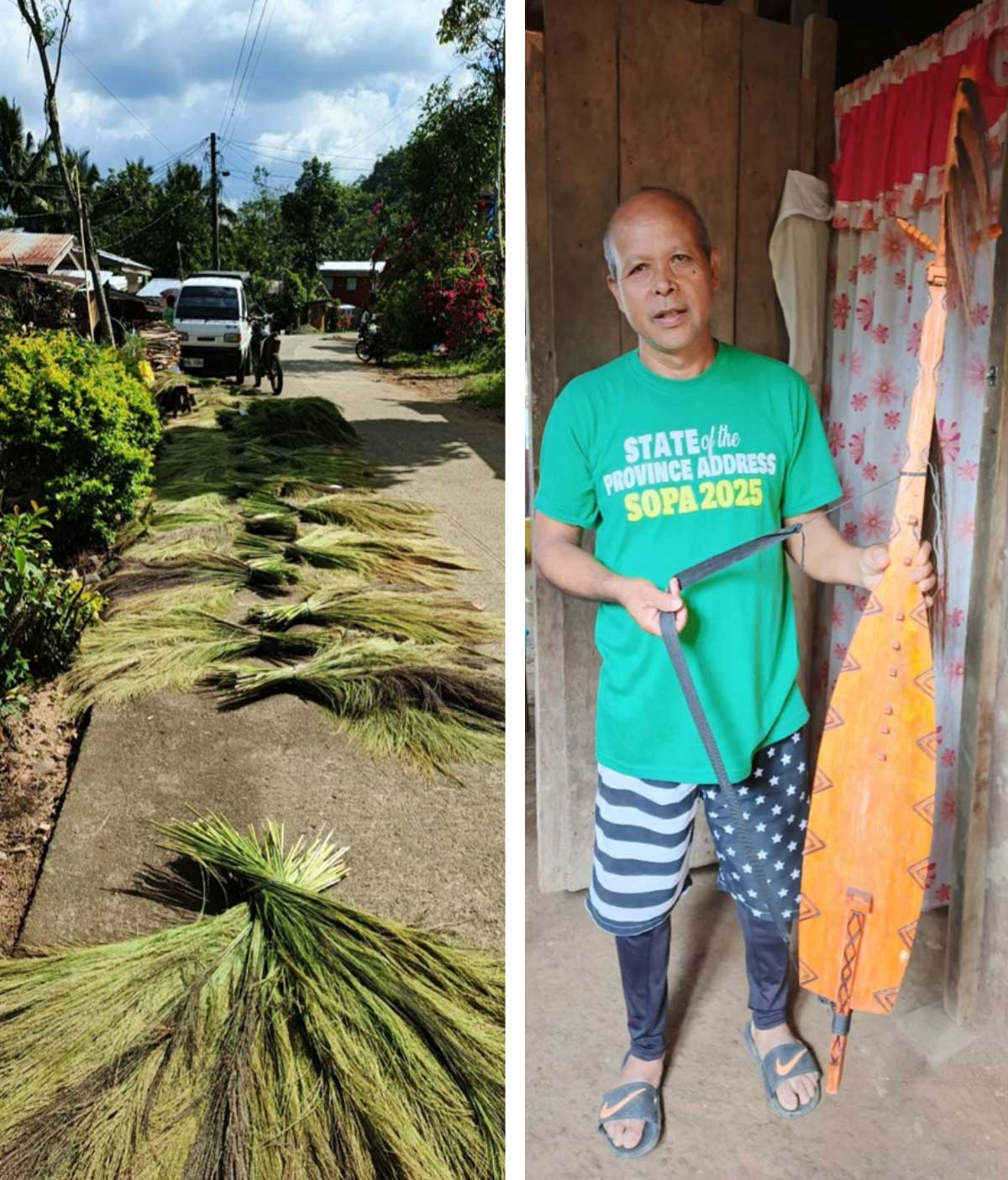
Tahiti lined up to dry along the road of Don Panaca in Magpet (left) and Lipatuan (chieftain) Joel Buntal of the Obo Manobo after sharing some information about their Indigenous artwork (right).
It is ironic that before their forests were declared protected and so-called development came, they roamed their lands, harvesting food freely from the wild, produced their own food, shared and enjoyed the fruit of their labors with the community. Now they say they only work the remaining lands allowed them to cultivate, then sell the produce so they can buy food—food that is only enough for a few days of survival.
The Obo Manobo children no longer speak their Indigenous language and parents do not encourage them to do so, in fear of their being bullied and labeled as dirty and netibos (local term for ‘native’ or ‘indigenous’). People are slowly forgetting their own Indigenous knowledge systems and practices as their connection to their lands and roots get severed by historical injustices worsened by the influx of other people into their lands and state policies impacting them directly.
Cultural Endurance
But walk into an Obo Manobo settlement on any day and you will still hear the heartbeat of the community. Their School for Indigenous Knowledge (SIK) serves as a sanctuary. Even as major corporate partners have left and funding has dried up, their cultural masters—volunteer teachers who are also community elders and leaders considered experts in their Indigenous knowledge systems and practices—continue to teach. They know that if the youth only speak Bisaya (regional language spoken by most people in Visayas and Mindanao) to avoid being bullied, the Obo Manobo will vanish within a generation. Despite having no permanent school building and limited funding for their abaca and tahiti enterprises, the women have stepped up and filled the gap. They are contributing what little they have to keep their social enterprises alive. They have drafted their own Free, Prior and Informed Consent (FPIC) protocol, sending a clear message to any outsider that entering their land requires respecting the Obo Manobo customary laws.
In the Arakan Valley, the Tinonanon Monuɓû are currently fighting a war of ink, paper and shadows. Business developers are luring the leaders and their community with 25-year leases that contain indefinite renewal clauses, legal traps that effectively and permanently alienate the people from their ancestral lands.
The Tinonanon Monuɓû people still practice the sokub tobaliyom, their indigenous ceremony in which a symbolic necklace is awarded to a person, bestowing authority and power to lead and/or represent the community. This is performed when selecting tribal leaders and mandatory representatives. Thus, reclaiming the necklace means nullifying the authority entrusted to a specific leader due to his or her failure to protect and serve the interest of the community. However, this is becoming difficult to accomplish especially when decisions are influenced by the lure of money. According to the Tinonanon Monuɓû, some individuals with vested interest are using money to sway clan leaders and control decisions. This issue is often worsened by external threats from investors and political allies, slowly causing disunity and undermining customary governance.
Sokub tobaliyom, they say, is supposed to be a beautiful ornament that ensures check and balance in the community’s leadership, yet leaders themselves are failing to protect its essence.
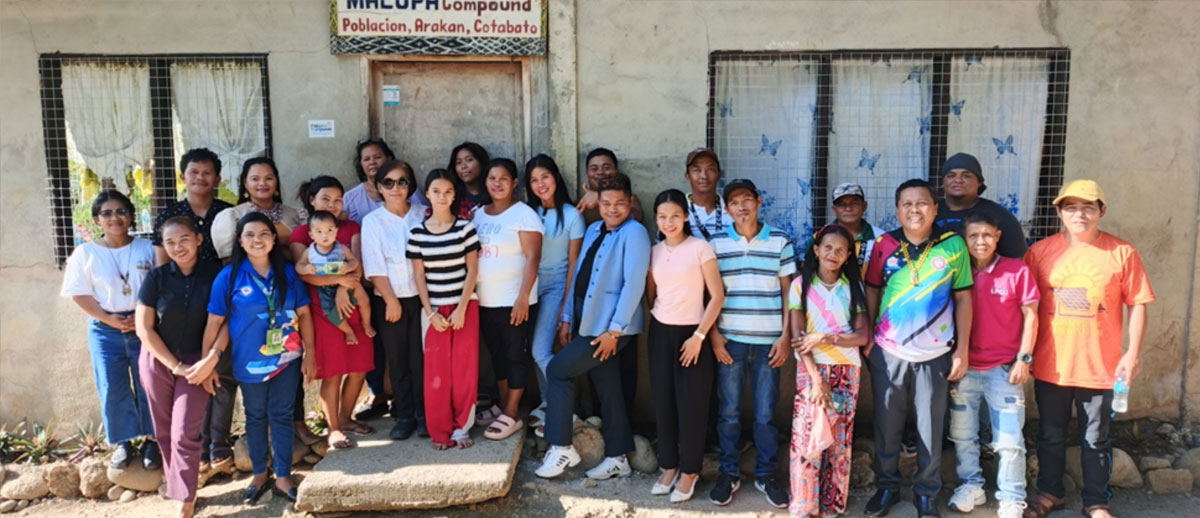
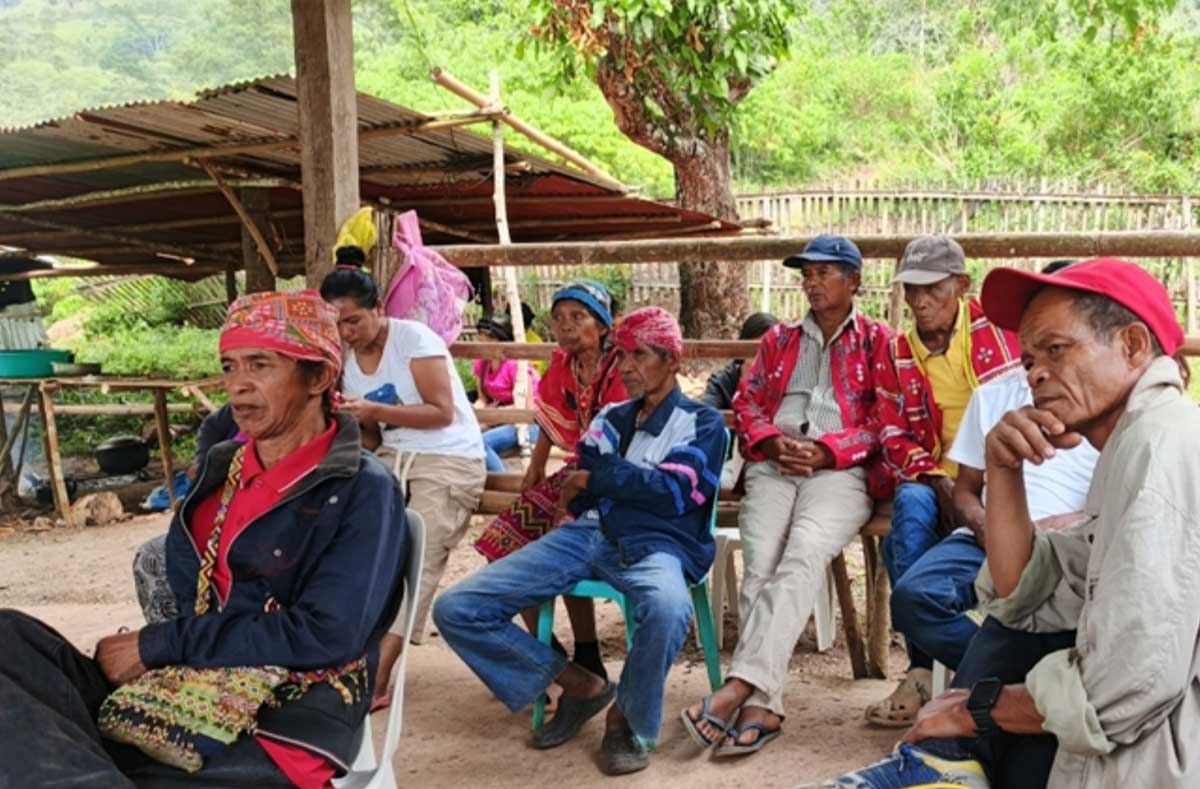
Tinonanon elders and youth with Tebtebba-Philippine Program staff after the focus group discussion on the IPS, held on March 16 at the Malupa Tribal Center in Poblacion, Arakan.
The community though is not without hope, as the Arakan municipal government is supportive in promoting Indigenous Peoples’ welfare. Its programs are beneficial to Indigenous Peoples, prioritizing their needs rather than catering to political schemes and manipulation. This is evident in the adoption of the Indigenous Peoples Code that legislates the full recognition, promotion and fulfillment of Indigenous Peoples’ rights within the municipality. The legislation also created the Indigenous Peoples’ Service Office with a budget for operation and launching of the Kalupa program. The program promotes revitalization of the forest-based economy and Indigenous agriculture, patching up fragmented forests and securing Indigenous communities’ market sovereignty. It aims to develop more livelihood opportunities for the people, not just the Tinonanon Monuɓû but also the Kulamanen Manuvu and other Indigenous groups in Arakan Valley.
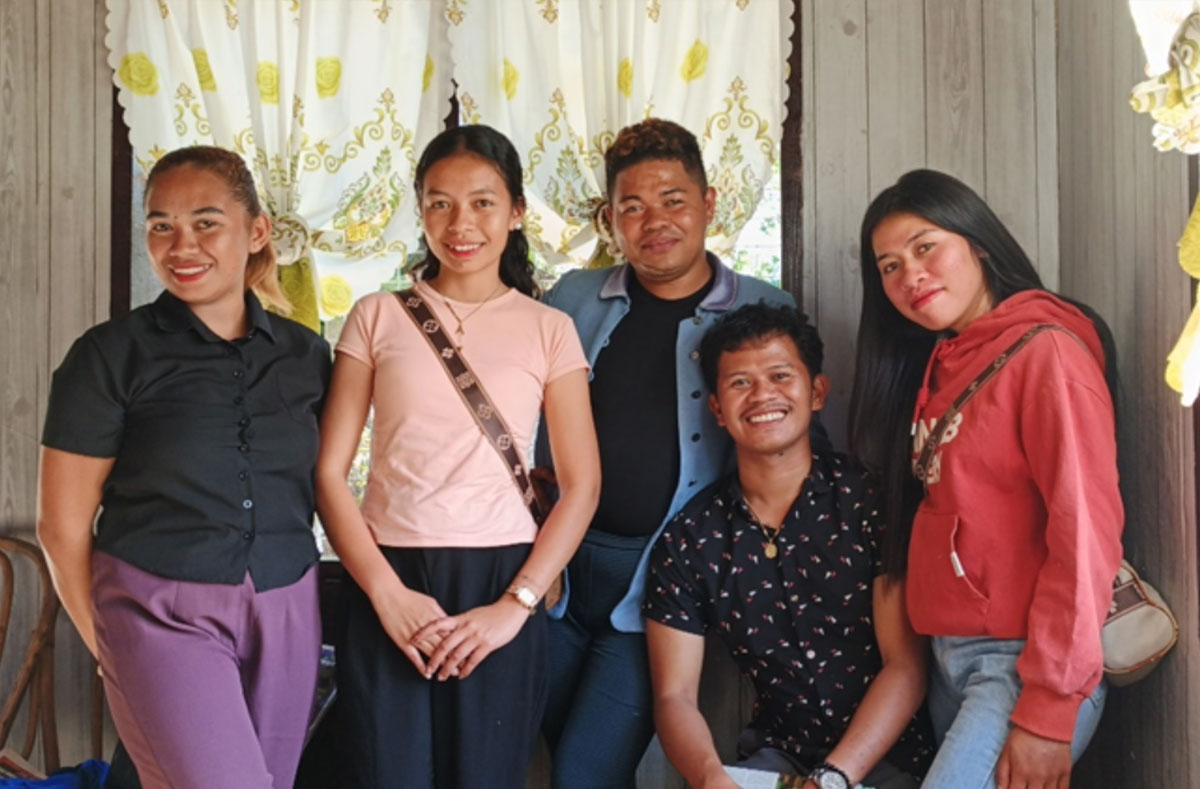
Some of the Tinonanon youth actively helped Malupa and the Indigenous Peoples Service Office of Arakan in promoting Indigenous knowledge and community development.
The stories of these three Indigenous groups are distinct, yet they share the same rhythm—a rhythm attuned to their shared mountain ranges, their collective identity and their conviction to remain rooted to their lands and values as Indigenous Peoples. Despite unpaved roads that make marketing crops an ordeal, technology and social media’s distracting influence on the youth, the lure of money and often conflicting state policies that alienate communities from their lands and heritage, the Manobo people of North Cotabato remain intact and united. The Kulamanen Manuvu are standing steadfast adeptly navigating the current social crisis; the Obo Manobo are holding on to the progress of their continued knowledge transmission and the collective movements of community leaders, farmers’ organization and women’s enterprises. And the Tinonanon Monuɓû are being assisted by their peers and local government.
The Manobo people are still weaving abaca. They continue to plant trees and high-value crops, conserve the forest and nurture watersheds that house the Philippine eagles the way their ancestors did. They are proving that true development is not about how much land one can sell, but how much of one’s Indigenous culture one can keep alive for the children who are yet to be born. They stand tall as they embody their role as primary caretakers of the land.
But while they may not speak loudly, their initiatives and situations are silent pleas that their rights are being exploited, their Indigenous ways undermined, and their actions overlooked. While they are doing what they can to protect what they still have, they need genuine support that allows them to thrive through their own Indigenous ways and means.