Women, Water and Equality: Mainstreaming Gender Equality in National Plans

Women, Water and Equality: Mainstreaming Gender Equality in National Plans

Justice is achieved not only when human rights laws exist, but when States fully implement them—ensuring gender equality in leadership, guaranteeing the meaningful participation of women, including Indigenous women, in decision‑making, and embedding their priorities into policies. 

This year’s International Women’s Day theme, Rights. Justice. Action. For ALL Women and Girls, reminds us that women’s rights are human rights. In the Philippines, the National Women’s Month 2026 carried the theme WE for Gender Equality and an Inclusive Society, emphasizing that WE—women and everyone—must work together to build a fair and inclusive future where equality flows into all aspects of life. In the same vein, the World Water Day’s theme, Where Water Flows, Equality Grows, highlights that safe drinking water and sanitation are not only survival needs but essential foundations for gender equality.

For Indigenous women and girls, this struggle is compounded by intersectional discrimination rooted in gender, Indigenous identity, ethnicity, disability, age, language, socioeconomic status, and HIV/AIDS status. The Convention on the Elimination of All Forms of Discrimination Against Women (CEDAW) affirms equal rights to health, education, and participation in public life—rights that cannot be achieved without secure access to water and sanitation. The United Nations Declaration on the Rights of Indigenous Peoples (UNDRIP) further recognizes collective rights to lands, territories, and resources, including water systems vital to Indigenous communities.

When water governance fails to respect these rights, scarcity and drought impact more Indigenous women, forcing them to walk long distances, exposing them to violence, and limiting opportunities for education and livelihood. Advocacy around International Women’s Day, Philippine Women’s Month, and World Water Day underscores the urgent need for Indigenous women’s leadership in shaping water policies that reflect their realities.

In the Philippines, efforts are underway to incorporate these global commitments into national frameworks, yet progress remains uneven and demands stronger accountability. The Indigenous Peoples’ Rights Act (RA 8371) must move beyond promise to practice in upholding Indigenous Peoples’ rights and guaranteeing equal access to basic services, including safe water. The National Commission on Indigenous Peoples (NCIP) has acknowledged CEDAW General Recommendation No. 39 (GR 39) as a guide for strengthening Indigenous women’s roles in governance and resource management, initiating consultations, leadership training, and inclusion in Free, Prior, and Informed Consent (FPIC) processes—but implementation must be enhanced and accelerated.

The Philippine Commission on Women (PCW) has aligned with CEDAW General Recommendation No. 30 by integrating concrete measures to ensure women’s human rights are protected before, during, and after conflict. These commitments are reflected in Gender and Development (GAD) planning and budgeting, capacity‑building for gender‑responsive governance, and campaigns that promote Indigenous women’s leadership through partnerships.

Importantly, the current Gender Equality and Women’s Empowerment (GEWE) Plan explicitly integrates Indigenous women by enhancing recognition of their ownership and access to land and resources as enabling factors in advancing and sustaining their roles and livelihoods—particularly in the context of pandemic recovery and achievement of the Sustainable Development Goals. It also emphasizes the need to highlight the plight of Indigenous women in government recovery programs and beyond.

Yet these efforts require consistent monitoring, adequate resourcing, and stronger accountability to ensure that national policy and practice genuinely include Indigenous women’s leadership, participation, and priorities. Moving forward, it is essential that the next update of the GEWE Plan integrates CEDAW General Recommendation No. 39 on the rights of Indigenous women and girls, thereby strengthening protections and advancing their rights across all sectors.

National development plans, particularly the Philippine Development Plan (PDP) 2023–2028, integrate gender equality into the SDGs, especially Goals 5 (Gender Equality) and 6 (Clean Water and Sanitation—but Indigenous women’s participation must be treated as a cross‑cutting priority rather than an option. The 2025 Voluntary National Review of the Philippines notes progress in the social sector SDGs, which includes gender equality. In 2022, Goals 1 (No Poverty), 3 (Health), and 4 (Education) needed acceleration, while Goals 2 (Zero Hunger) and 5 (Gender Equality) required trend reversals. By 2024, most social SDGs improved to “needs acceleration,” though Goal 3 declined to “regressing.”

For Goal 5, the Current Status Index rose from ‑4.2 in 2022 to 2.7 in 2024, but data gaps persist. Target 5.2 (violence against women and girls) improved to “on track,” while 5.3 (eliminate harmful practices) still needs acceleration. Target 5.5 (women’s participation and leadership) regressed, reflecting declines in women’s managerial roles. Gender‑disaggregated data remains limited, especially at the local level, making it difficult to track Indigenous women’s participation. Without their leadership and decision‑making power, these commitments risk staying on paper rather than transforming lives.

In biodiversity advocacy, the updated Philippine Biodiversity Strategy and Action Plan (PBSAP 2024–2040) integrates the Kunming‑Montreal Global Biodiversity Framework (KMGBF) Targets, particularly Target 23 on ensuring a gender‑responsive approach in biodiversity action and decision‑making, and its Gender Action Plan, which explicitly calls for gender equality and Indigenous Peoples’ participation.

Complementing this, the Indigenous Peoples’ Biodiversity Strategic Action Plan (IPBSAP), crafted for and by Indigenous Peoples, enriches the national plan by embedding Indigenous rights—especially the leadership and knowledge of Indigenous women and girls—into community‑driven conservation strategies. The IPBSAP aims to ensure that biodiversity governance is ecological, social, cultural, and gender‑responsive. It is imperative that the government supports the integration of IPBSAP in its plans and programs, with Indigenous women’s leadership and priorities at the center of national biodiversity resilience strategies.

The Climate Change Commission (CCC) has integrated earlier UNFCCC Gender Action Plans into the National Climate Change Action Plan. Building on this, the Philippines’ National Adaptation Plan (NAP 2023–2050) embeds gender-responsive adaptation priorities. The updated Belém Gender Action Plan adopted during the 30th Conference of Parties of the UN Framework Convention on Climate Change last year, which explicitly recognizes Indigenous women, calls for stronger monitoring indicators to ensure their full participation in climate finance, adaptation, and resilience strategies. 

Gender equality in leadership and Indigenous women’s priorities in policy are matters of justice and survival. Water, climate, and biodiversity governance cannot succeed without Indigenous women’s knowledge and participation. The Philippines must move from rhetoric to accountability—resourcing their leadership, safeguarding rights, and centering voices in every decision. Only then can equality flow as freely as water, sustaining both people and the planet. 

Looking Back to Move Forward: Reflections from the First Meeting of the CBD Subsidiary Body on Article 8(j)

Looking Back to Move Forward: Reflections from the First Meeting of the CBD Subsidiary Body on Article 8(j)

In Panama City, from 20 to 30 October 2025, representatives of 105 governments and more than 130 observer organizations gathered for the first meeting of the Subsidiary Body on Article 8(j) and Other Provisions of the Convention on Biological Diversity (SB8J-1). For many Indigenous Peoples’ representatives, the meeting marked the beginning of a new chapter in global biodiversity governance.

In another publication, I had written with considerable optimism about the transition of the Ad Hoc Open-ended Working Group on Article 8(j) (WG8J) into a permanent subsidiary body under the UN Convention on Biological Diversity (CBD). The creation of the new body seemed like a natural next step on the path towards full recognition of the role of Indigenous Peoples and of local communities in international environmental governance frameworks such as the UN CBD and its Kunming Montreal Global Biodiversity Framework (KMGBF).

After spending nearly two weeks in Panama attending the back-to-back meetings of the Subsidiary Body on Scientific, Technical and Technological Advice (SBSTTA 27) and SB8J-1, however, I found myself reflecting differently.

The meeting was historic, but not in the way I had expected.

Looking back, I realize that my optimism was shaped by years of advocacy, solidarity among advocates and a belief that progress within international environmental governance naturally builds upon itself. What I encountered in Panama was a reminder that institutional change is rarely straightforward. Every advance carries with it new political tensions, competing interpretations and questions about who gets to participate, who gets represented and whose voices ultimately shape decision-making.

Far from being the culmination of a successful campaign, SB8J-1 felt more like the beginning of a new and uncertain phase.

Why Article 8(j) Matters

Article 8(j) of the CBD recognizes the importance of the traditional knowledge, innovations and practices of Indigenous Peoples and of local communities in the conservation and sustainable use of biodiversity. It has been the primary entry point for Indigenous Peoples to engage in CBD negotiations.

The Ad Hoc Working Group on Article 8(j), established in 1998, gradually evolved participation practices that went beyond what was formally written in CBD decisions. Through years of advocacy by Indigenous Peoples and supportive governments, Indigenous representatives gained opportunities to co-chair meetings, participate as Friends of the Bureau and engage more directly in negotiations.

These arrangements were never guaranteed. They emerged through practice, relationships and the willingness of Parties and Chairs to create space for Indigenous participation.

When Parties agreed at COP 16 to establish a permanent Subsidiary Body on Article 8(j), many saw it as a major institutional achievement. The expectation was that a permanent body could formalize enhanced participation modalities of the ad-hoc working group and therefore strengthen Indigenous participation and elevate Indigenous concerns across all areas of CBD implementation.

Yet one of the central lessons of SB8J-1 was that progress should never be taken for granted.

As the Filipino proverb reminds us, “Ang hindi marunong lumingon sa pinanggalingan ay hindi makakarating sa paroroonan.” (Those who do not look back to where they came from cannot reach their destination.) Understanding the history of Article 8(j) is essential because many of the rights and participation opportunities that Indigenous Peoples enjoy today were hard-won gains. The challenge now is ensuring that they are not weakened during this institutional transition.


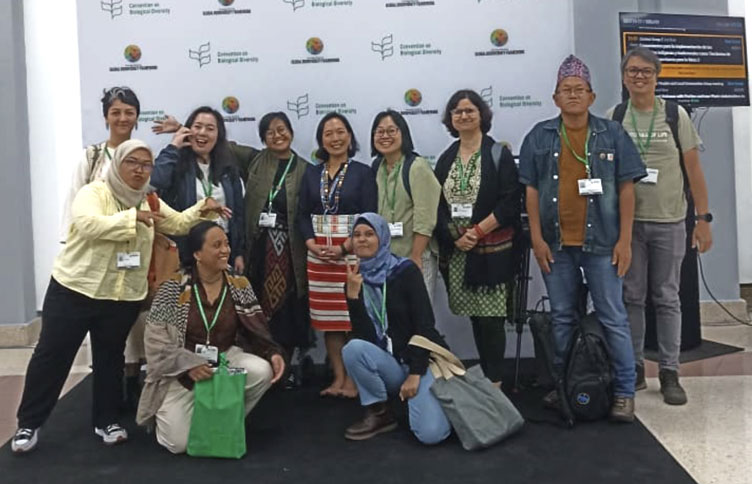
IFB Asia Caucus representatives group picture at the close of SB8J-1 at Panama City, Panama


Defending Participation in a New Institutional Landscape

The most politically sensitive discussions at SB8J-1 centered on the development of the body’s modus operandi—the rules that will govern how the Subsidiary Body functions.

For the International Indigenous Forum on Biodiversity (IIFB), the global caucus representing Indigenous Peoples and local communities in CBD negotiations, the priority was clear: ensure that the transition to a permanent body does not diminish existing participation modalities.

Negotiations focused on issues such as the selection of Indigenous co-chairs, the role of Friends of the Bureau representing the seven socio-cultural regions recognized by the UN Permanent Forum on Indigenous Issues (UNPFII) and the procedures through which Indigenous representatives are nominated and recognized.

Several positive provisions remain in the draft recommendations, including support for capacity-building for Indigenous co-chairs and recognition of the expertise of Indigenous representatives. At the same time, debates emerged around proposals that could potentially narrow the autonomy of Indigenous Peoples in selecting their own representatives.

Moreover, countries who do not recognize Indigenous Peoples pointed out that local communities are not as equally represented in the practice of the Working Group, and would like to see more participation opportunities for them in the new Subsidiary Body.

The discussions revealed a deeper question: can a more formalized intergovernmental institution preserve the flexibility and participation practices that Indigenous Peoples (and local communities) lobbied to establish under the Working Group?

The answer remains uncertain and will likely be one of the defining issues leading into CBD Conference of Parties (COP) 17.

Indigenous Territories Beyond Conservation Categories

Another major focus of the meeting was the development of guidelines related to Targets 2 and 3 of the Global Biodiversity Framework, particularly regarding ecosystem restoration, spatial planning, environmental impact assessments and area-based conservation.

At the center of these discussions were Indigenous and traditional territories (ITTs).

One of the most debated provisions concerned recognition of ITTs as distinct governance systems that contribute to biodiversity conservation. Indigenous representatives argued that conservation policies should recognize and strengthen Indigenous governance rather than absorb Indigenous territories into state-defined conservation frameworks. Despite diverse national experiences, there was agreement within IIFB that future guidelines must remain flexible, respect self-identification and be grounded in international human rights standards.


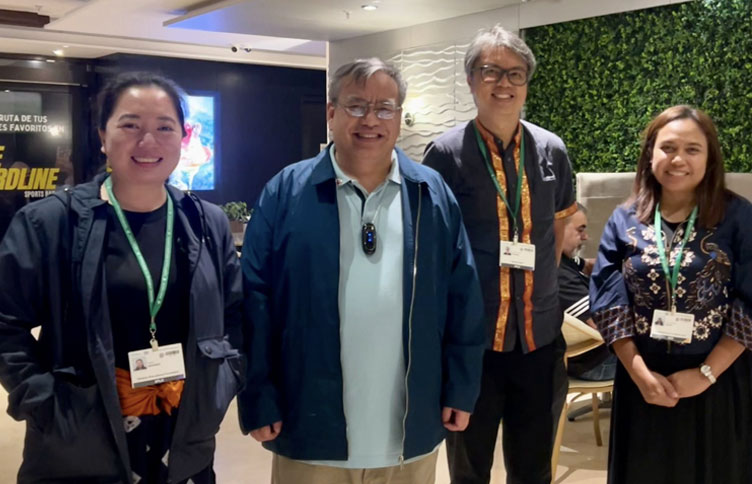
Meeting of IIFB Asia caucus through ICCA SEA representatives with ACB on the potential
inclusion of IP and LC contributions in the ASEAN Biodiversity Outlooks 4 (ABO4)


Traditional Knowledge and Indigenous-Led Monitoring

The meeting also addressed how traditional knowledge can contribute to measuring progress under the Global Biodiversity Framework.

IIFB highlighted the importance of Indigenous-led monitoring initiatives, community-based monitoring systems and Local Biodiversity Outlooks (LBO) as complementary mechanisms for assessing progress towards biodiversity goals.

Looking Ahead to COP 17

The recommendations from SB8J-1 will now move forward to CBD COP 17 in Yerevan, Armenia, in 2026.

Much remains unresolved. Questions concerning Indigenous representation, the recognition of Indigenous territories and the institutional design of the new Subsidiary Body will continue to be negotiated.

For Indigenous Peoples, however, the significance of SB8J-1 lies not only in the recommendations adopted but also in what the meeting revealed.

The transition from the Working Group to a permanent Subsidiary Body is not simply an administrative change. It is a political process that will shape how Indigenous Peoples participate in global biodiversity governance for years to come.

If Panama taught me anything, it is that institutional progress is never guaranteed. The advances achieved under Article 8(j) were the product of decades of advocacy, negotiation and persistence of Indigenous Peoples. The challenge now is not only to defend those gains but to ensure that the new body strengthens rather than dilutes them.

Perhaps that is the real significance of SB8J-1. It was not the triumphant culmination I had imagined. Instead, it was a reminder that every new chapter begins with uncertainty—and that the work of shaping its outcome has only just begun.

Cultural Flattening in the Age of AI Digital Colonialism

Cultural Flattening in the Age of AI Digital Colonialism

Yet, challenges and tensions remain. There is a real risk of digital colonialism if Artificial Intelligence (AI) systems are imposed without Indigenous input, replicating historical patterns of exploitation.

Baguio City, Philippines—Lucas Kasosi of the Indigenous Maasai  people of Kenya and Tanzania in Africa published a story on the Cultural Survival website about a disturbing misrepresentation by Artificial Intelligence (AI) technologies. The case involved an AI-generated image of a Maasai neck choker used during a public campaign by the Kenyan State Department of Culture in 2024. In the image, one of the most evident missteps was the depiction of the Maasai neck bracelet or choker as being worn by men instead of women. According to Kasosi, this goes far beyond a simple aesthetic mistake.

Adobe also came under fire for hosting AI-generated stock images that misrepresented Indigenous Peoples. The National Indigenous Times reported that Adobe Stock contained AI-generated images labeled as “Indigenous Australians,” many of which did not resemble Aboriginal and Torres Strait Islander peoples. Some figures even displayed random body markings that were culturally meaningless, disregarding the deep significance of traditional markings to specific First Nations groups. Critics, including Indigenous artists and human rights advocates, warned that such inaccuracies perpetuate harmful misrepresentation and raise serious concerns about whether genuine Indigenous artworks were used to train the software without free, prior and informed consent (FPIC).

These cases clearly pierce the principles of Indigenous data sovereignty and strongly affirm the persistence of cultural flattening.

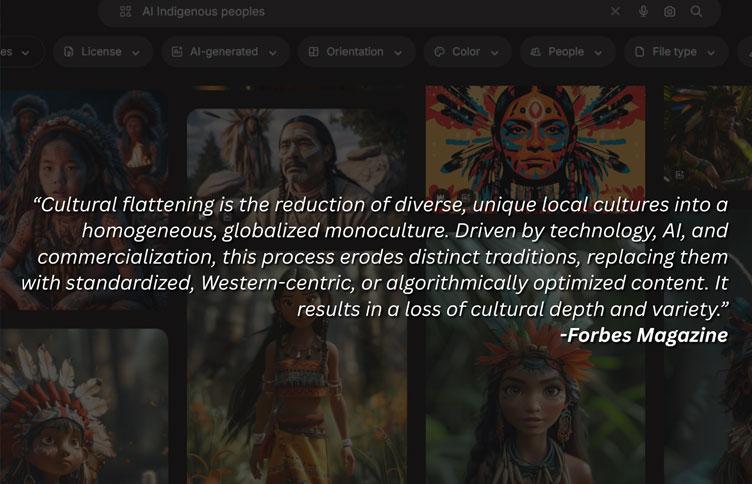
AI  exploitation of Indigenous Peoples often takes the form of cultural flattening. This refers to the erosion, homogenization or replacement of unique cultures, traditions and artistic expressions by a uniform, mainstream global culture. Think of it as all the fish in the sea being canned and labeled in a single package, as if they belong to the same species, when clearly, they do not. Through globalization, this foundational dilemma of cultural flattening promotes a “one-size-fits-all” aesthetic and lifestyle.

AI can never fully comprehend the complexities of human existence. Within these complexities lie culture and tradition, elements deeply rooted in identity and community. With the massive rise of AI utilization across all dimensions of society, this technological revolution, which attempts to capture aspects of human consciousness, poses a potential threat to Indigenous Peoples’ ownership and representation of their identity.

In the past, we have seen how technology has gradually undermined Indigenous Peoples’ independence in governance. Machinery and tools have contributed to environmental degradation, disrupted sacred heritage and accelerated the loss of language. Indigenous youth, while turning toward innovative preservation methods, now face tidal waves of misrepresentation brought about by AI within Indigenous rights movements.

According to research, many ethnic groups are misrepresented by AI-generated platforms, reflecting systemic bias in datasets and algorithms. A study on Indigenous representation in AI found that current systems often lack diversity in training data, leading to distorted portrayals of Indigenous identities and cultures.

Even when AI is used with good intentions for representation and creativity, it often produces unsolicited and unchecked inconsistencies in how Indigenous Peoples’ knowledge is depicted, whether in images, videos, language, or other cultural expressions.

Indigenous Peoples’ data sovereignty clearly states their right to own, control, access and possess data that are derived from them,their knowledge systems, customs and territories. Meanwhile, Indigenous worldviews offer a powerful framework for rethinking how AI should be developed and used. Many Indigenous cultures emphasize relationality, the understanding that humans, nature and technology are interconnected. This perspective challenges the dominant view of technology as separate from human life and instead situates AI within a broader living system. Concepts such as stewardship, reciprocity and balance provide ethical anchors that can guide AI toward serving communities rather than exploiting them.

Through an Indigenous lens, AI is not merely a tool but part of a system that must respect cultural values. Indigenous data sovereignty becomes central here, ensuring that communities retain control over how their data is collected, stored and used. Ethical AI, in this context, means aligning machine learning with Indigenous principles of consent, respect and responsibility. Without these safeguards, AI risks perpetuating the same colonial patterns that have historically undermined Indigenous autonomy.


Practical applications of AI demonstrate how these values can be put into practice. AI can support language revitalization by helping preserve and teach endangered Indigenous languages, ensuring that cultural identity remains strong across generations. It can also play a role in environmental monitoring, assisting communities in protecting lands and ecosystems that are vital to their survival and heritage. In healthcare, AI can be tailored to meet the specific needs of Indigenous communities while respecting traditional practices, creating a balance between modern innovation and cultural continuity.

Yet, challenges and tensions remain. There is a real risk of digital colonialism if AI systems are imposed without Indigenous Peoples’ input, replicating historical patterns of exploitation. Bias in AI datasets continues to overlook Indigenous knowledge systems, reinforcing misrepresentation.

To address these issues, collaborative governance models are essential, frameworks where Indigenous voices actively shape AI policy and development. FPIC-focused protocols must include independent mechanisms in AI usage. These directly influence datasets and algorithms and must clearly align with accurate cultural representations. Only through such inclusive approaches can AI evolve into a technology that truly embodies harmony, respect and balance.

These steps directly contribute to validation and belonging, where seeing one’s culture accurately reflected in mainstream media affirms the lived experiences of Indigenous Peoples and fosters a strong sense of value and identity. This, in turn, helps repair long-standing societal biases and stereotypes.

Finally, for Indigenous Peoples, especially the youth, this fosters pride in their culture and strengthens their confidence in their roots.

Shrinking Civic Spaces in the Asia-Pacific Region:  Implications at the National Levels

Shrinking Civic Spaces in the Asia-Pacific Region: Implications at the National Levels

In recent years, the Asia-Pacific region has witnessed an alarming trend: the shrinking of civic spaces. This poses significant challenges not only at the regional level but also has far-reaching implications nationally. A recent press statement from the Asia Pacific Regional CSO Engagement Mechanism (APRCEM), along with insights from key civil society leaders, underscores the urgency of defending civic spaces to reclaim the development agenda for the people.

On February 26, 2025, over 140 civil society representatives gathered in Bangkok, Thailand for the Asia Pacific Peoples’ Forum on Sustainable Development. They adopted a collective statement titled Reclaiming the Development Agenda for the People, Advancing Development Justice in Asia and the Pacific. APRCEM, a key facilitator of civil society engagement, also participated in the 12th Asia Pacific Forum on Sustainable Development (APFSD) and highlighted the crucial role and contributions of civil society.

In its press statement, APRCEM emphasized the need to defend civic spaces and resist censorship and reprisals at regional and global levels. It also called attention to the harassment and threats faced by human rights defenders at local and national levels.

One recent incident illustrates this repression: a side-event organized by Asia Pacific Forum on Women, Law and Development (APWLD), Office of the High Commissioner for Human Rights (OHCHR), International Labour Organization (ILO) and APRCEM was requested to be canceled due to the use of human rights language. The event aimed to launch a regional report presenting evidence of 10 years of Sustainable Development Goals (SDGs) implementation in Asia and the Pacific, including grassroots stories and a feminist accountability map.

April Porteria, Programme Officer from APWLD, shed light on the broader implications of such censorship. “The cancellation of our side-event sends a chilling message,” she said. “If member states can instruct the cancellation of events at the regional level, it heightens surveillance, threats and harassment at the national level,” she added.

“We pushed back against what we see as clear censorship. After consulting with our co-organizers, we decided to pull out of the side-event entirely. We refuse to hold the event under such conditions,” Porteria explained. She then added that they had been sending letters of concern to the United Nations Economic and Social Commission for Asia and the Pacific (UN ESCAP) but had not received a clear and acceptable response.

“The implications are severe,” she continued. “The very reason APRCEM was created is because of the challenges people’s organizations face at the national level. Many are excluded from Voluntary National Reviews (VNRs) or other processes. The regional platform is meant to elevate these voices. If even this space is threatened, it exacerbates repression at the national level,” she said.

Maria Jennifer Guste of the Council for People’s Development and Governance (CPDG) highlighted how shrinking civic spaces undermine national-level civil society engagement. She noted that authoritarian governments, often backed by imperialist developed countries and local elites, suppress critical voices and curb civic spaces. “The attacks on civic spaces are not just a resurgence but a blatant assault, especially during economic and health crises,” Guste stated. She also pointed out the discriminatory impact on women, who form the majority of development workers. “These attacks on women as development actors are contrary to the goals of gender equality and non-discrimination,” she remarked.

Cham Perez from the Center for Women’s Resources (CWR) emphasized the need for civil society to consolidate its ranks and push back against shrinking civic spaces. “Reclaiming development starts at the communities where we work,” she asserted. “It’s important to share what has happened here and consolidate our ranks at the regional level. We need to be ready for the lead-up to the High-Level Political Forum and other processes,” Perez stressed.

As APRCEM aptly reminds us, the UN Charter begins with We, the People. Civil society must claim its rightful space in shaping the development agenda.

In the face of multiple crises, governments must listen to grassroots and marginalized communities. Genuine sustainable development can only be achieved through democratic deliberations that recognize and address systemic barriers. Civil society organizations play a crucial role in this process and their engagement must be free from censorship, discrimination, or violence.

The shrinking of civic spaces in the Asia-Pacific region is a dire warning of the broader challenges faced by civil society at the national level. It is a call to action for governments to respect, protect and fulfill the rights of civil society and people’s organizations to participate in decision-making processes.

As we continue to advocate for development justice, it is essential to remember that change begins with us. By uniting and asserting our rights, we can reclaim our spaces and drive the genuine transformation needed for a just and sustainable future.
Development Justice Now! is not just a slogan but a clarion call for action.