
Indigenous peoples have the right to self-determination. By virtue of that right they freely determine their political status and freely pursue their economic, social and cultural development.
- Article 3, United Nations Declaration on the Rights of Indigenous Peoples
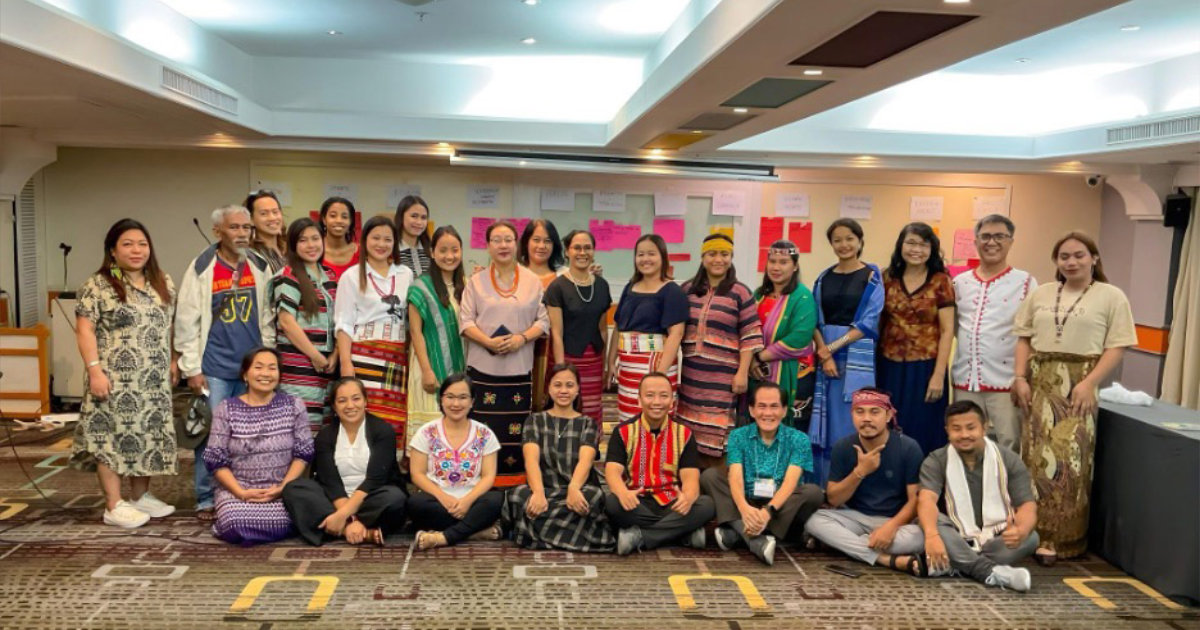
Baguio City, Philippines – Two parallel training activities aimed at empowering indigenous peoples in Asia and Latin America and strengthening their self-determined sustainable development initiatives were conducted on August 5-9, 2024 in Bangkok, Thailand and in Puerto Cabezas, Nicaragua, respectively.
The activity in Thailand provided a space for participants to deepen their understanding of critical decisions and processes within the United Nations related to and relevant to Indigenous Peoples such as climate change, biodiversity, sustainable development, gender equality, and indigenous women’s rights.
In her opening remarks, Eleanor Dicataan-Bang-oa, coordinator of the Indigenous Women Programme of Tebtebba and member of the Secretariat of the Asian Indigenous Women’s Network (AIWN), emphasized the visions and promises embedded in key international processes. “Let us see how we can participate and how we can mobilize or influence more actions towards reaching the vision that we have as Indigenous Peoples,” she added.
Indigenous Peoples’ Situations
In the context setting, the participants highlighted that many of their communities are affected by government or private development projects leading to their displacement and hindering their ability to practice their cultures. Most of the participants mentioned recurring issues connected to their land rights such as land grabbing, selling of lands, land conversion or concession, and restrictive government policies on land protection and conservation.
Helen Biangalen-Magata, coordinator of the Climate and Biodiversity Programme of Tebtebba, provided further context by presenting data on the impacts of climate change, environmental degradation, poverty, and the killings of human rights defenders, particularly of indigenous human rights defenders. She emphasized that Indigenous Peoples should be central to climate change discussions because they are the most severely affected by its impacts despite contributing the least to the crisis.
In Nicaragua, Mirna Cunningham Kain, chairperson of Centro para la Autonomía y Desarrollo de los Pueblos Indígenas (CADPI), opened the training with a discussion on the global changes focusing on climate and biodiversity issues, their far-reaching impacts, and the specific challenges Indigenous Peoples face. The participants also viewed the film Fever, which illustrates how human activities contribute to climate change, with profound effects on indigenous communities.
Eileen Mairena Cunningham, part of the Indigenous Peoples Major Group (IPMG) for Sustainable Development, introduced to the participants during the training in Nicaragua, the human rights frameworks, focusing on tools like the UN Declaration on the Rights of Indigenous Peoples (UNDRIP) and the Universal Declaration of Human Rights (UDHR). She highlighted the availability of mechanisms that can help address the human rights issues of Indigenous Peoples.
Indigenous Peoples as Political Actors in Pursuit of Sustainable Development
In Nicaragua, Cunningham Kain emphasized the role of Indigenous Peoples as political actors, actively participating in various arenas to advocate for and shape their own development.
In Thailand, Robie Halip, coordinator of the Indigenous Peoples Major Group for Sustainable Development (IPMG) and Right Energy Partnership (REP), and Jimrex Calatan, communications and outreach staff of Tebtebba’s Strategic Communications and Knowledge Management Department, led a workshop where participants, as political actors, discussed their aspirations, challenges, and recommendations related to sustainable development.
Key aspirations mentioned include the full and effective implementation of the Sustainable Development Goals (SDG), the establishment of accountable governments, the strengthening of laws on lands, territories, and resources, and the inclusion of LGBTQI++ in all discussions. Challenges identified by participants included inadequate government interventions, lack of free, prior, and informed consent (FPIC) in lawmaking, and restricted access to lands, territories, and resources.
Halip stressed that sustainable development can only be achieved if human rights concerns are addressed. “We must be consistent in our involvement in the realization of the 2030 agenda. What we want, what we bring to the table – this is how we contribute to the implementation of SDGs at the country level,” she emphasized.
To strengthen their skills as political actors in different levels of political participation, the participants were guided on how they prepare and deliver effectively their statements or interventions.
Data is important in statements or interventions. With this, Halip emphasized the importance of thoroughly analyzing case studies and creating a fact sheet through a systematic and comprehensive process, requiring a complete understanding of the situation and meticulous attention to detail. Accurate data is crucial when presenting cases to governments; even a single incorrect number can undermine the credibility of the entire fact sheet. Therefore, ensuring that numbers, event chronology, and details about victims and perpetrators are precise is essential to prevent delegitimization of the reports, she said.
Part of the training was a negotiation exercise where the participants were tasked to assert the self-determined priorities of Indigenous Peoples. Hypothetical scenarios were presented and the participants had to create 3-minute interventions to several UN meetings, to speak to the press, and deliver a speech in a legislative body.
Updates on Climate Change, Biodiversity and Indigenous Women
In the training in Thailand, Biangalen-Magata provided a brief history and updates on the engagement of Indigenous Peoples with the United Nations Framework Convention on Climate Change (UNFCCC). She highlighted the need for Indigenous Peoples, who experience losses and damages, to be recognized in climate finance discussions as they often do not receive adequate financial support in their countries.
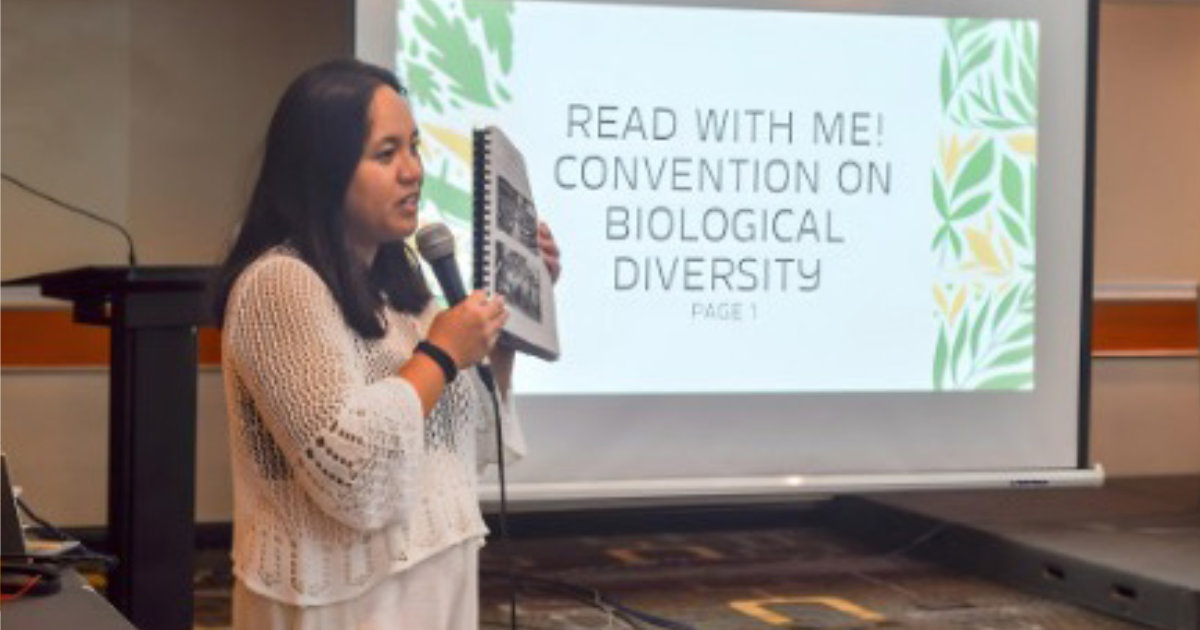
Abigail Kitma, a member of the Climate and Biodiversity Programme of Tebtebba, highlighted that the United Nations Convention on Biological Diversity (UN CBD) recognizes the interdependence between Indigenous Peoples and biodiversity as well as the crucial role of Indigenous Peoples in conserving life on earth. Kitma also noted that the Kunming-Montreal Global Biodiversity Framework (KMGBF), adopted last 2022, is an ambitious global initiative set to address the current biodiversity crisis from 2020 to 2030.
The participants also revisited the Beijing Platform for Action (BPfA) focusing on its 12 critical action areas and the related Beijing Declaration of Indigenous Women. Dictaan-Bang-oa emphasized that the Beijing Declaration was a monumental achievement for women, especially indigenous women, as it highlighted the indivisibility and interdependence of their rights. “Indigenous women have accomplishments. We are actors, hoping to influence the visions we have for our communities,” she remarked.
The participants, who were all indigenous women, listed their three priority issues and organized these according to the 12 action areas of the BPfA.
In the training in Nicaragua, Mairena Cunningham led a discussion on indigenous women, highlighting the disproportionate impact of global challenges on women as compared to men. She also elaborated on the rights of indigenous women, the tools available to empower them, and the means to integrate them in development plans.
Knowledge-based and intercultural approaches, the territorial management systems and the local economies of Indigenous Peoples were also tackled in the training in Nicaragua. Cunningham Kain highlighted alliances and mechanisms available to support and strengthen the territorial management systems.
An exchange of cultural and traditional practices, with participants sharing traditional dances, handicrafts, textiles, food, beverages, and the histories of their communities happened in the training in Nicaragua. Local cultural groups and the regional house of culture also participated in this vibrant showcase.
The training in Bangkok, Thailand was attended by 20 participants from the networks of ELATIA, Asian Indigenous Women’s Network and Eastern Himalayan Network on Climate Change. In Nicaragua, twenty-two participants from across Latin America participated in the training which was organized by CADPI.