
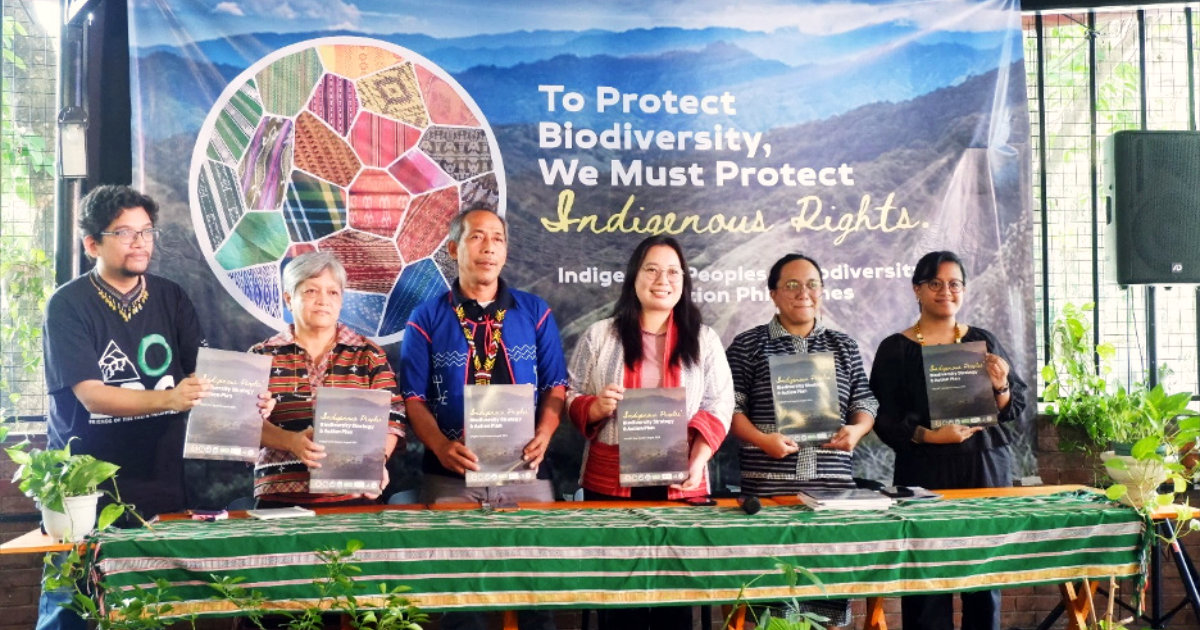
Baguio City, Philippines – A press conference set the tone for the Philippine delegation heading to COP 16 held in Cali, Colombia from October 21 to November 1, 2024. The delegation, representing the Indigenous and Biodiversity Coalition of the Philippines, brought the Indigenous Peoples’ Biodiversity Strategy and Action Plan (IPBSAP)—a product of collective efforts to highlight the crucial role of Indigenous Peoples (IPs) in biodiversity conservation–to the said event.
The IPBSAP synthesizes indigenous knowledge, values and rights, emphasizing local indigenous plans, agro-ecological knowledge systems and culture-based nature solutions as key to halting biodiversity loss in the Philippines. The press conference was held on October 12, 2024 at Harong Café in Quezon City, Philippines.
The IPBSAP was showcased during a side event at COP 16 titled “Indigenous Biodiversity Strategy and Action Plan Philippines: Opportunities and Challenges”. The delegation was composed of representatives from various organizations, each committed to championing indigenous-led conservation efforts.
Jill Cariño, coordinator at Partners for Indigenous Knowledge Philippines (PIKP), Inc., delivered a compelling message, “Together with fellow Indigenous leaders, advocates and support groups, we have been developing an IPBSAP that harnesses our collective commitment to protect the country’s last remaining ecological corridors”.
Carino highlighted that the delegation to the COP 16 will present an indigenous-led plan to safeguard the Philippines’ globally significant biodiversity hotspots, 96 of which are located within indigenous territories out of 128 key biodiversity areas identified.
Asami Segundo, Southeast Asia coordinator of the ICCA Consortium, added, “We’ve protected life for generations but still lack a seat at the table. It’s time to recognize that true conservation needs indigenous leadership.”
Segundo signified hope that this effort will signal world leaders to acknowledge the vital role of Indigenous Peoples in biodiversity restoration.
Abigail Kitma of Tebtebba also discussed the Kunming-Montreal Global Biodiversity Framework (KMGBF) and how IPBSAP mechanisms align with its goals. The KMGBF, ratified under the United Nations Convention on Biodiversity, includes long-term objectives that the Philippines has committed to achieve.
“We saw this as an opportunity to share the status and context of biodiversity in Indigenous Peoples’ lands and territories, the key threats and challenges we face, and the vital contributions we can make to biodiversity,” added Josefa Tauli, policy coordinator of the Global Youth Biodiversity Network and advocacy officer of PIKP, emphasized that indigenous knowledge, when combined with science and technology, offers collaborative solutions to the pressing challenges of biodiversity conservation.
The press conference, facilitated by Leon Dulce, project coordinator at the Legal Rights and Natural Resources Center (LRC), was attended by various media outlets, which inquired about the mechanisms and implications of the IPBSAP.