

In Panama City, from 20 to 30 October 2025, representatives of 105 governments and more than 130 observer organizations gathered for the first meeting of the Subsidiary Body on Article 8(j) and Other Provisions of the Convention on Biological Diversity (SB8J-1). For many Indigenous Peoples’ representatives, the meeting marked the beginning of a new chapter in global biodiversity governance.
In another publication, I had written with considerable optimism about the transition of the Ad Hoc Open-ended Working Group on Article 8(j) (WG8J) into a permanent subsidiary body under the UN Convention on Biological Diversity (CBD). The creation of the new body seemed like a natural next step on the path towards full recognition of the role of Indigenous Peoples and of local communities in international environmental governance frameworks such as the UN CBD and its Kunming Montreal Global Biodiversity Framework (KMGBF).
After spending nearly two weeks in Panama attending the back-to-back meetings of the Subsidiary Body on Scientific, Technical and Technological Advice (SBSTTA 27) and SB8J-1, however, I found myself reflecting differently.
The meeting was historic, but not in the way I had expected.
Looking back, I realize that my optimism was shaped by years of advocacy, solidarity among advocates and a belief that progress within international environmental governance naturally builds upon itself. What I encountered in Panama was a reminder that institutional change is rarely straightforward. Every advance carries with it new political tensions, competing interpretations and questions about who gets to participate, who gets represented and whose voices ultimately shape decision-making.
Far from being the culmination of a successful campaign, SB8J-1 felt more like the beginning of a new and uncertain phase.
Why Article 8(j) Matters
Article 8(j) of the CBD recognizes the importance of the traditional knowledge, innovations and practices of Indigenous Peoples and of local communities in the conservation and sustainable use of biodiversity. It has been the primary entry point for Indigenous Peoples to engage in CBD negotiations.
The Ad Hoc Working Group on Article 8(j), established in 1998, gradually evolved participation practices that went beyond what was formally written in CBD decisions. Through years of advocacy by Indigenous Peoples and supportive governments, Indigenous representatives gained opportunities to co-chair meetings, participate as Friends of the Bureau and engage more directly in negotiations.
These arrangements were never guaranteed. They emerged through practice, relationships and the willingness of Parties and Chairs to create space for Indigenous participation.
When Parties agreed at COP 16 to establish a permanent Subsidiary Body on Article 8(j), many saw it as a major institutional achievement. The expectation was that a permanent body could formalize enhanced participation modalities of the ad-hoc working group and therefore strengthen Indigenous participation and elevate Indigenous concerns across all areas of CBD implementation.
Yet one of the central lessons of SB8J-1 was that progress should never be taken for granted.
As the Filipino proverb reminds us, “Ang hindi marunong lumingon sa pinanggalingan ay hindi makakarating sa paroroonan.” (Those who do not look back to where they came from cannot reach their destination.) Understanding the history of Article 8(j) is essential because many of the rights and participation opportunities that Indigenous Peoples enjoy today were hard-won gains. The challenge now is ensuring that they are not weakened during this institutional transition.
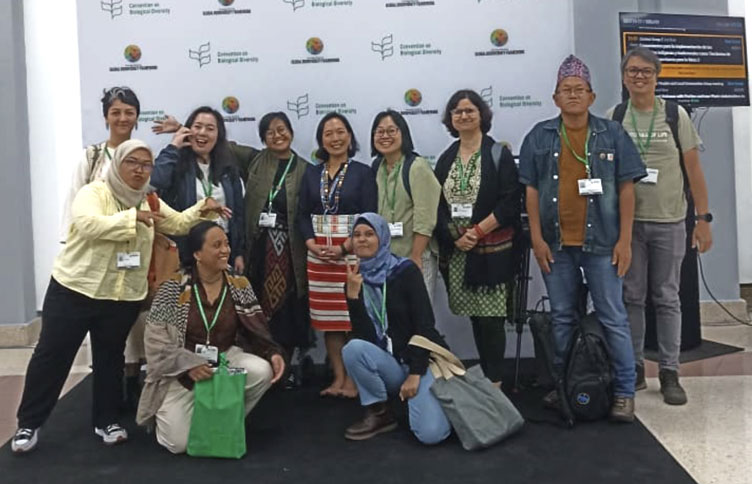
IFB Asia Caucus representatives group picture at the close of SB8J-1 at Panama City, Panama
Defending Participation in a New Institutional Landscape
The most politically sensitive discussions at SB8J-1 centered on the development of the body’s modus operandi—the rules that will govern how the Subsidiary Body functions.
For the International Indigenous Forum on Biodiversity (IIFB), the global caucus representing Indigenous Peoples and local communities in CBD negotiations, the priority was clear: ensure that the transition to a permanent body does not diminish existing participation modalities.
Negotiations focused on issues such as the selection of Indigenous co-chairs, the role of Friends of the Bureau representing the seven socio-cultural regions recognized by the UN Permanent Forum on Indigenous Issues (UNPFII) and the procedures through which Indigenous representatives are nominated and recognized.
Several positive provisions remain in the draft recommendations, including support for capacity-building for Indigenous co-chairs and recognition of the expertise of Indigenous representatives. At the same time, debates emerged around proposals that could potentially narrow the autonomy of Indigenous Peoples in selecting their own representatives.
Moreover, countries who do not recognize Indigenous Peoples pointed out that local communities are not as equally represented in the practice of the Working Group, and would like to see more participation opportunities for them in the new Subsidiary Body.
The discussions revealed a deeper question: can a more formalized intergovernmental institution preserve the flexibility and participation practices that Indigenous Peoples (and local communities) lobbied to establish under the Working Group?
The answer remains uncertain and will likely be one of the defining issues leading into CBD Conference of Parties (COP) 17.
Indigenous Territories Beyond Conservation Categories
Another major focus of the meeting was the development of guidelines related to Targets 2 and 3 of the Global Biodiversity Framework, particularly regarding ecosystem restoration, spatial planning, environmental impact assessments and area-based conservation.
At the center of these discussions were Indigenous and traditional territories (ITTs).
One of the most debated provisions concerned recognition of ITTs as distinct governance systems that contribute to biodiversity conservation. Indigenous representatives argued that conservation policies should recognize and strengthen Indigenous governance rather than absorb Indigenous territories into state-defined conservation frameworks. Despite diverse national experiences, there was agreement within IIFB that future guidelines must remain flexible, respect self-identification and be grounded in international human rights standards.
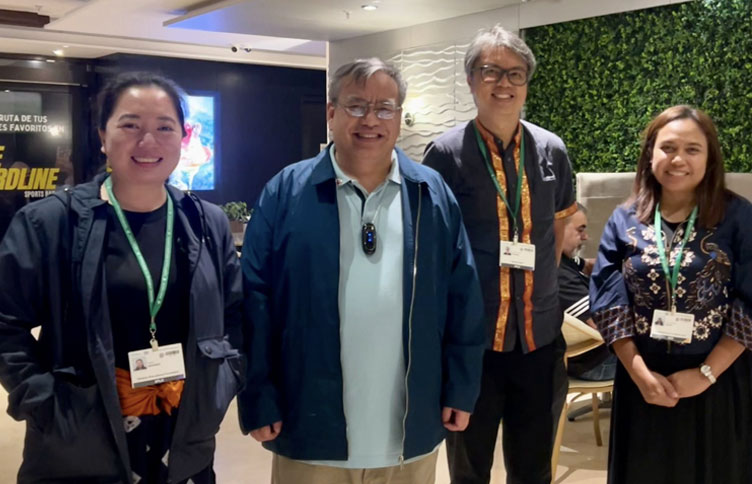
Meeting of IIFB Asia caucus through ICCA SEA representatives with ACB on the potential
inclusion of IP and LC contributions in the ASEAN Biodiversity Outlooks 4 (ABO4)
Traditional Knowledge and Indigenous-Led Monitoring
The meeting also addressed how traditional knowledge can contribute to measuring progress under the Global Biodiversity Framework.
IIFB highlighted the importance of Indigenous-led monitoring initiatives, community-based monitoring systems and Local Biodiversity Outlooks (LBO) as complementary mechanisms for assessing progress towards biodiversity goals.
Looking Ahead to COP 17
The recommendations from SB8J-1 will now move forward to CBD COP 17 in Yerevan, Armenia, in 2026.
Much remains unresolved. Questions concerning Indigenous representation, the recognition of Indigenous territories and the institutional design of the new Subsidiary Body will continue to be negotiated.
For Indigenous Peoples, however, the significance of SB8J-1 lies not only in the recommendations adopted but also in what the meeting revealed.
The transition from the Working Group to a permanent Subsidiary Body is not simply an administrative change. It is a political process that will shape how Indigenous Peoples participate in global biodiversity governance for years to come.
If Panama taught me anything, it is that institutional progress is never guaranteed. The advances achieved under Article 8(j) were the product of decades of advocacy, negotiation and persistence of Indigenous Peoples. The challenge now is not only to defend those gains but to ensure that the new body strengthens rather than dilutes them.
Perhaps that is the real significance of SB8J-1. It was not the triumphant culmination I had imagined. Instead, it was a reminder that every new chapter begins with uncertainty—and that the work of shaping its outcome has only just begun.