
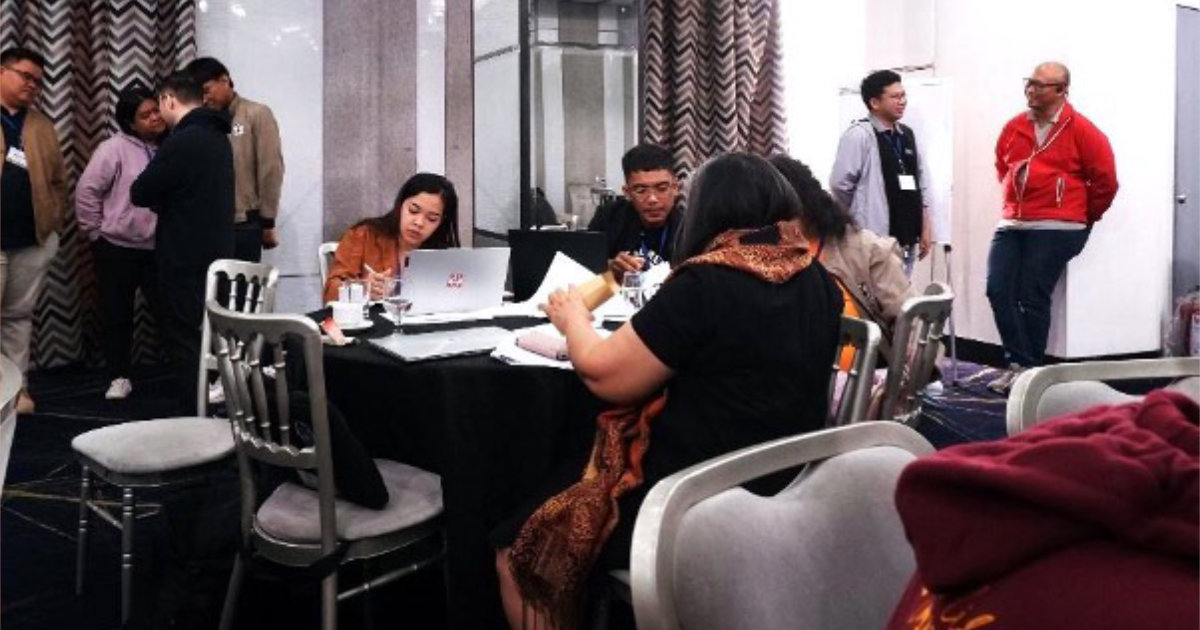
Baguio City, Philippines–The Applying Social and Behavioral Change (SBC) to Human Rights Advocacy and Strategies Workshop, which happened last March 21-22, 2024 at the Hive Hotel in Quezon City, Philippines, promised to be an eye-opening workshop. Spearheaded by the AHA! Behavioral Design, a behavioral design company in the country, and organized by the Alternative Law Groups coalition, this workshop was to equip participants with the Behavioral Operations Management Program and Process Playbook (BOMP) tool offering practical application in relation to organizational nature and advocacy context.
“All of us, whatever our profession is, we influence people towards positive change,” stated Cate De Guzman, program officer of AHA! Behavioral Design, during the first day of the session. De Guzman presented the Behavioral Design Approach in crafting human rights advocacy and programs. The said approach, she said, is a systematic understanding of how people think and make decisions. Together with her colleagues, they pointed out that behavioral design takes the best and unique facets of these fields and systematically merges them into proof that helps develop effective solutions.
After her presentation, participants were requested to join a hands-on session on utilizing the Behavioral Science Customer Experience tool, which generally involved looking into the awareness level of the chosen audience for the advocacy, how to make them interested, implant desire in them, make them engage, and compel and grow loyalty from the audience and volunteers for a certain program.
VolunTao: Prime example of a Behavioral Approach Campaign
Presenters from the AHA! Behavioral Design group reinforced their suggested approach with a materialized product advocacy of their own where they utilized the Behavioral Design Approach as a case study example to further elaborate the effectiveness of the paradigm.
AHA! Behavioral Design’s presentation title slide during the event
They presented the VolunTao: Para sa Karapatang Pantao, a multi-organizational call for volunteers in which anyone can participate in different advocacies and programs such as indigenous land rights, agrarian reform and rural development rights, women and children rights, educational research, and rights of overseas Filipino workers. Using the Behavioral Design approach, they mentioned that they could effectively call for volunteers–college students or working professionals–regardless of their specific schedules and based on each would-be volunteer’s knowledge and skill levels. The VolunTao mainly focuses on priming the identity of the volunteers, utilizing volunteer availability, framing opportunities for the identified available volunteers, and eliciting positive emotions from these volunteers by highlighting the potential personal growth derived from fulfilling specific tasks.
The Applying SBC to Human Rights Advocacy and Strategies Workshop offers an alternative opportunity for participants to merge theoretical knowledge with practical skills in advancing human rights causes. By harnessing the power of behavioral science and social marketing, advocates can drive meaningful change and foster a more just and equitable society, its facilitators stressed.
“Knowing doesn’t normally mean doing,” stated Rachel Gutierrez, project coordinator of Initiative for Advancing Community Transformation (I-ACT), to close the first day of the workshop, further emphasizing the power of engaging volunteers in different human rights empowering activities. Gutierrez underscored the necessity of action in relation to advancing human rights. It is not by merely identifying the current struggles, she said, but by initiating societal engagement in the crucial aspects and issues related to human rights in the different levels.
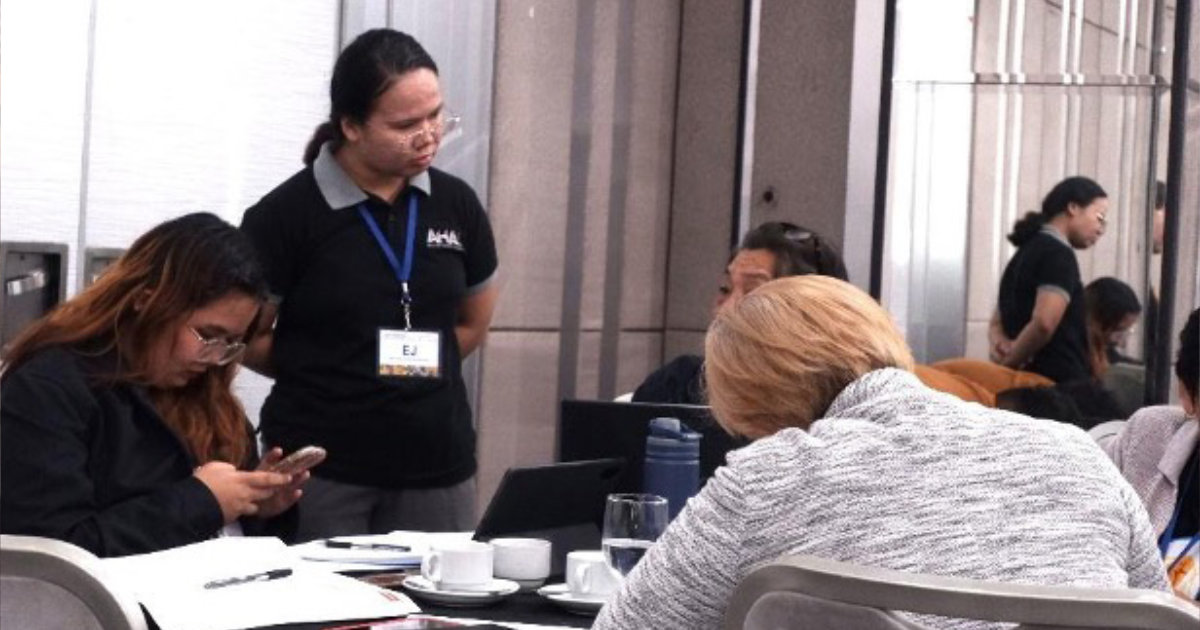
The Applying SBC to Human Rights Advocacy and Strategies Workshop offers an alternative opportunity for participants to merge theoretical knowledge with practical skills in advancing human rights causes. By harnessing the power of behavioral science and social marketing, advocates can drive meaningful change and foster a more just and equitable society, its facilitators stressed.
On the second day of the workshop, the activity progressed to more advanced topics and real-time application of the Behavioral Design Approach using the BOMP tool. The workshop delved into the realm of social marketing, emphasizing its role in influencing behavior change for the social good. Participants learned about systematic planning and processes, marketing principles, and techniques tailored to advocacy efforts. They also guided the participants through the process of designing core advocacy tools and crafting compelling messages that aim to resonate with target audiences.
The two-day workshop underscored the importance of setting specific, measurable, achievable, relevant, and time-bound (SMART) goals and marketing objectives, understanding intrinsic and extrinsic values, and choosing the right mediums for information dissemination. Using the BOMP tool, facilitators guided the participants in priming target audiences, relationship networks, aspirations, and behavior. This tool, they said, can be the primary reference for identifying the felt-need product for the audience of a chosen advocacy.