Nature-Based Solutions: A Synopsis of Indigenous Peoples’ Experiences, Gaps in Practice and Potential Actions

Nature-Based Solutions: A Synopsis of Indigenous Peoples’ Experiences, Gaps in Practice and Potential Actions

Executive Summary

Nature Based Solutions (NBS) is increasingly becoming a common feature in reference to a bundle of possible responses to the need for mitigation of and adaptation to climate change and enhancement of biodiversity conservation. NBS is broadly associated with “actions to protect, sustainably manage and restore natural or modified ecosystems that address societal challenges effectively and adaptively, simultaneously providing human well-being and biodiversity benefits.”

The growing interest on NBS arises out of an apparent ‘Climate Crisis’ in which around one million species already face extinction, many within decades, and the realization that only radical changes in the immediate future could help mitigate the crisis.1 In addition, by 2030, the world is projected to face a 40% global water deficit under the business-as-usual (BAU) scenario and it is expected that climate change will exacerbate these conditions.2

The discourse on NBS raises broader fundamental questions around how humanity perceives nature and how it chooses to relate to it. Nature is generally accepted to be the cradle of life and that all life forms exhibit interdependence in complex ways. Beyond this utilitarian view of nature, nature is also associated with identity, spirituality, and sacredness particularly among indigenous peoples.

Indigenous peoples’ knowledge and community-based monitoring systems, traditional occupations, indigenous food systems, and basic survival are all grounded in nature-based solutions, regulated through customary systems of governance. Indigenous peoples’ NBS strategies are founded on key principles such as reciprocity (“returning the gift”) and mutuality; cultural identity and customary law; context-based relationality and local economies; community-based governance; and social justice inclusivity.

These sustainable uses and responses to climate change strategies by indigenous peoples constitute a missed opportunity in efforts to sustainable utilization and nature-based solutions to climate change. The recognition of indigenous peoples’ rights, the security of their lands and territories, the promotion of indigenous knowledge including CBMIS and Customary governance, their full and effective participation, their direct access to resources and capacity building are all critical in ensuring indigenous peoples’ contribution to NBS initiatives.


Download full report

-----

1 Indigenous environmental justice and sustainability, Deborah McGregor1 , Steven Whitaker2 and Mahisha Sritharan2 March 2020

2 The United Nations World Water Development Reports (2014–2019)
Elatia Partners Working Toward Better Recognition of their Indigenous Rights

Elatia Partners Working Toward Better Recognition of their Indigenous Rights

“We are still experiencing stagnancy in the efforts to pursue recognition of our indigenous rights, although documents calling for this have been already submitted to the government.”

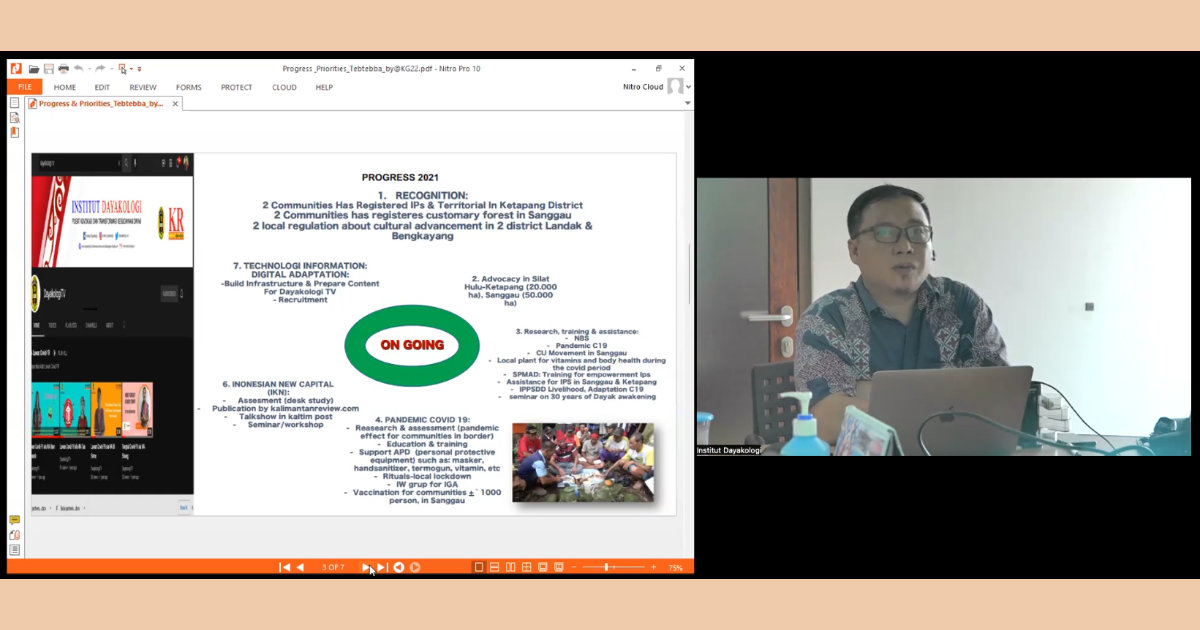
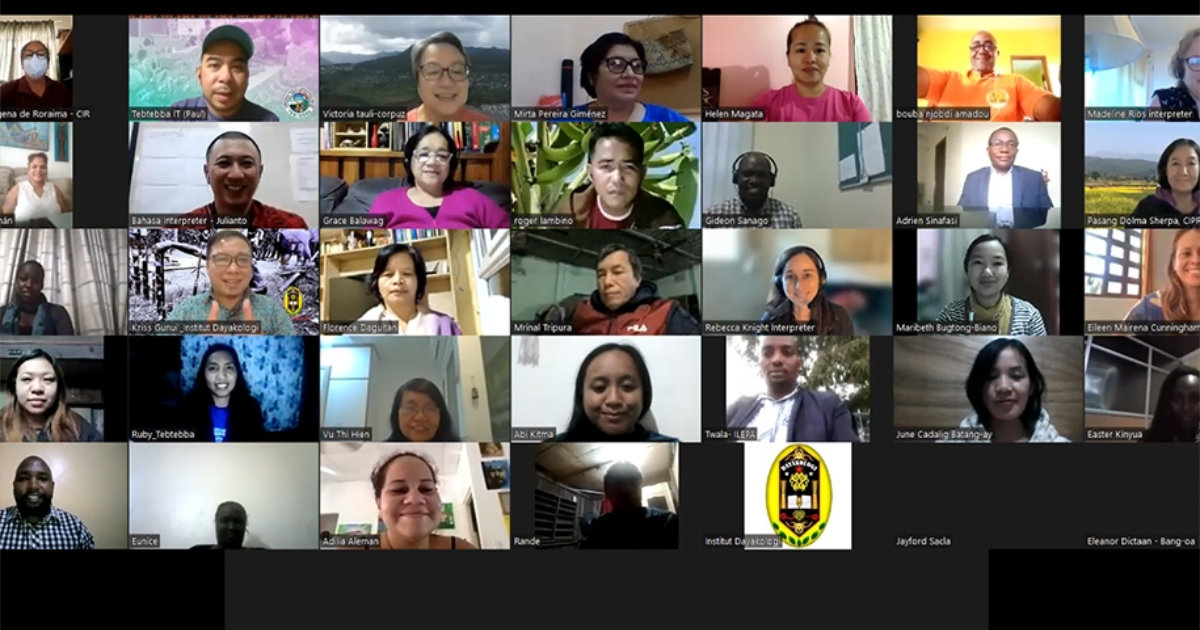
Krissusandi Gunui of Institut Dayakologi in Indonesia presented the current situation of indigenous peoples in their area, including the “systematic deforestation in their area” with indigenous lands fast-becoming oil palm plantations while palm oil prices continuing to increase. He also highlighted ID’s different achievements and challenges encountered in 2021 as well as their organization’s plans this 2022 during the two-day start-of-the-year meeting of Elatia partners virtually facilitated by Tebtebba and the Elatia Indigenous Training Institute on 31 January and 7 February 2022 with support from Brot fur die Welt.


elatia ipr 2Krissusandi Gunui, ID


Despite the insurmountable challenges experienced last year, however, the partners also enumerated their various achievements in relation to the continuous fight for the recognition, respect, and promotion of indigenous peoples’ rights. Joseph Ole Simel of Mainyoito Pastoralists Integrated Development Organization (MPIDO) in Kenya cited one victory. “Together with the Food and Agriculture Organization (FAO) and the County Government of Kajiado’s Ministry of Land and Resources, we were able to find a cheaper and more efficient way for indigenous peoples to solve disputes regarding land and natural resources without necessarily engaging costly and complex lawyers (to represent us in court),” he pointed out. “[The use of] the Alternative Justice System, recognized by the Kenyan Constitution and traditionally used by indigenous peoples was agreed upon and adopted,” he shared.

Most of the partners shared on the current difficulties encountered by their communities due to the present COVID-19 pandemic. “There has been extreme drought and occurrence of forest fires, as well,” shared Mirtha Pereira Giménez of the Federación por la Autodeterminación de los Pueblos Indígenas (FAPI), adding that indigenous peoples have died due to the disease during the height of its onslaught last year in Brazil. “The country is also experiencing a second wave of COVID at the moment,” she said.


elatia ipr 3Mirtha Pereira Giménez, FAPI


“Around 70% of Baka people are internally displaced people (IDPs) because of the pandemic and (ongoing) conflicts in Cameroon,” Bouba Njobdi of Lelewal Foundation reported. “We supported those who were trapped in the conflict area,” he asserted, mentioning that their organization focused efforts on calling for strengthened IDP, human, and indigenous peoples’ rights as well as the provision of capacity-building activities including those related to (a) livelihood through heightened promotion of local products and (b) tailoring workshops including the purveyance of sewing machines and tailoring materials.

Kimaren Ole Riamit of the Indigenous Leaders Enhancement Partners (ILEPA) in Kenya echoed a similar situation in their communities as he narrated that “teenage pregnancies, school drop-outs, and land rights violations are still rampant and consistent problems” in Kenya, which became more prevalent due to the limitations caused by the pandemic.


elatia ipr 4Kimaren Ole Riamit, ILEPA


Nevertheless, many partners expressed their hopeful outlook for this 2022 as they stated the numerous plans that they have in their respective organizations. Gideon Sanago of PINGO’s Forum in Tanzania, for instance, reflected the plans of other Elatia partners as he enumerated their organization’s goals for this year which included further localizing the Indigenous Peoples’ Sustainable Self-Determined Development (IPSSDD) Framework in their communities, participating in various local, national, and global processes, and providing support to different civil society organizations (CSOs) and indigenous peoples organizations (IPOs) in the country, among others.

Preity Gurung of the Center for Indigenous Peoples’ Research and Development (CIPRED) in Nepal emphasized the need to sustain the promotion and protection of indigenous practices, land tenure rights, and community forestry activities, among others. Pasang Dolma Sherpa of CIPRED added that increasing the efforts toward better collation of disaggregated data on indigenous peoples is vital in support of “our call for the inclusion of traditional knowledge in the creation of policies.”


elatia ipr 5Preity Gurung, CIPRED


Elatia, a Maasai term that means “neighborhood,” is a network of indigenous peoples organizations all over the world, established in 2008, working towards promotion, recognition and fulfillment of indigenous rights through meaningful and active participation in all the different political arenas, levels, processes, and platforms.

Tebtebba submission for the "Facilitative Working Group (FWG) input to the Global Stocktake (GST) process"

Tebtebba submission for the "Facilitative Working Group (FWG) input to the Global Stocktake (GST) process"

How do our indigenous brothers and sisters from Asia address climate change?  Examples from Asia, from Asia, Africa and Latin America, as indicated below:

1. Case Studies of Indigenous peoples and contributions to nature-based solutions (NBS) and Climate Change Response through Indigenous peoples customary governance and knowledge systems 

Note: Research studies were coordinated by Tebtebba with researchers/consultants of Elatia partners  from May to December 2021.  (Note: E-publications by Tebtebba on March, 2022) with support from the Climate and Land Use Alliance (CLUA)

1.1. Collective Nature-based Solutions of the Dayak Indigenous Peoples in Sanggau and Ketapang Districts of West Kalimantan, Indonesia by  Krissusandi Gunui, Executive Director, Institute Dayakology (ID)

The Dayak people from the communities in West Kalimantan, namely, the Tiong Kandang and Tampun Juah and the Jalai and Kendawangan located in Sanggau and Ketapang Districts, of West Kalimantan demonstrate that indigenous and local knowledge (ILKs) are models for sustainable use and management of their lands and natural resources including their forest ecosystems. Their indigenous local knowledge (ILK) are considered as nature-based solutions, which has been developed over generations to provide guidance to live in harmony with nature and maintain balanced relationship between people and nature. These are also relevant in addressing the environmental crisis brought about by climate change.  The emergence of COVID 19 raised a new awareness of how local wisdom or ILKs can be utilized in resolving the current issues on climate change and the health crisis.

The knowledge of indigenous communities existed and developed as they use everything available in their environment. This knowledge originated from the values and beliefs transmitted from their ancestors such as the observance and practice of the principles of the Seven Fortunes. The principles of the Seven Fortunes relate to their natural resource management and self-determined development. These principles are diversity and sustainability, cooperation and togetherness, organic and naturalness, rituals and spirituality, process and effectiveness, domestic and subsistence, and customary law and locality. All these principles have been manifested by the communities in their interaction with nature and their management of natural resources, such as their forest ecosystem. 

Download full document

The new environmental and social safeguards: The position of the Indigenous Peoples Advocacy Team

The new environmental and social safeguards: The position of the Indigenous Peoples Advocacy Team

General description

The Governing Instrument of the Green Climate Fund (GCF), in its chapter X, establishes that "the Board of Directors will agree on and adopt environmental and social safeguards of best practices, which will be applied to all programs and projects financed with the Fund's resources."

At its seventh meeting in May 2014, the Board adopted the Performance Standards for Environmental and Social Sustainability of the International Finance Corporation (IFC) Performance Standards as the interim Environmental and Social Safeguards of the GCF. The interim ESS was to be used by the GCF until the GCF-specific ESS was fully developed.

The initial guidance framework for the GCF accreditation process states that, in relation to the development of the GCF ESS, once the GCF has accumulated a history of experience and lessons learned, an in-depth review will take place.

The process is that the GCF must establish a balance without contradictions between the Indigenous Peoples Policy, the Gender Policy and the Environmental and Social Policy, specifically considering the safeguards (ESS) in order to ensure that the climate financing that this organization grants, does not harm  Indigenous and local communities or ecosystems.

With the three aforementioned Policies, the GCF ensures standards that include, in a coordinated and comprehensive manner the following: equitable management of environmental and social risks; the importance of fully and effectively involving Indigenous peoples in the design, development and implementation of strategies and activities; and  incorporation of the the gender perspective from the beginning of its operations as an essential element of decision-making for the deployment of its resources.

An important aspect to mention—and that should not be overlooked—is that, although it is true that the GCF is responsible for ensuring that these policies are reflected in the concept notes and proposals for financing and action plans, the AE is directly responsible for implementing them in the country level

In this sense, Indigenous Peoples Organizations (IPOs) are interested and wish to accompany the development of the discussions on the in-depth review of the ESS, in order to ensure the rights of Indigenous Peoples. In this document, we intend to develop annotations on the ESS as a contribution to the in-depth review process.

Download full document

The Need to Monitor Indigenous Peoples' Access to the Green Climate Fund

Introduction

Climate finance and the commitments around it are important topics when discussing the current environmental crisis. Climate finance often generates a series of discussions and questions that can sometimes seem endless, complicated, and non-transparent. In the global financial architecture, there are specialized financing mechanisms. One such financial mechanism is the Green Climate Fund (GCF)[1].

The Green Climate Fund held its first Board meeting (B.01) in August 2012 and approved its first funding proposal three years later in November 2015, during the 11th Board meeting (B.11). This first funding proposal has a significant importance for Indigenous Peoples, as it established action in the Datem area of Peru, in Indigenous Peoples' territories and above all raised a series of questions related to the respect and recognition of the collective rights of Indigenous Peoples and especially the importance of conducting processes that integrate free, prior and informed consent (FPIC) in all climate actions to be carried out on indigenous lands and territories, as well as the importance of follow-up and monitoring of the Fund's actions.

This first GCF project set the tone for recognizing the importance of monitoring climate finance from the position of Indigenous Peoples as there is a lack of data that can tell us how many climate action projects are implemented on Indigenous lands and territories –more importantly, how these climate actions will impact Indigenous Peoples and how data obtained from climate finance monitoring are  integrated into the said actions.

In February 2018, the GCF approved the Indigenous Peoples Policy during its 19th Board Meeting. This policy was the response to the constant concerns of Indigenous Peoples to avoid any negative impacts on activities that are financed by the Fund and that supports the rights of Indigenous Peoples and defines compensation for any unavoidable harm that Indigenous Peoples might suffer. Another objective of the policy was to ensure that Peoples are fully and effectively involved in consultations at all levels when developing Indigenous Peoples' policies, projects and programs, allowing them to benefit from GCF activities and projects in a "culturally appropriate manner"[2].

There are many important elements to know if these actions are having a "do-good" rather than a "do-no-harm" effect, and that is why monitoring the actions of the Green Climate Fund, but especially the actions taking place on our lands and territories as Indigenous Peoples, is so important. 

Download full document

-----

[1] Green Climate Fund (GCF), which was defined during COP 16 in Cancun, the parties established the GCF as the operating entity of the financial mechanism of the Convention. And developing countries committed to mobilize US$100 billion from 2020 onwards.

[2] An Indigenous Peoples toolkit on the green climate fund indigenous peoples´ policy (2020) Tebtebba Foundation ver en: https://www.tebtebba.org/index.php/component/fileman/?view=file&routed=1&name=IP%20Toolkit%20on%20GCF%20and%20the%20IP%20Policy%20%28English%29.pdf&container=fileman-attachments